By 3pm most days at my standing desk, I used to just lock my knees and lean my forearms on the desk like a guy waiting for a bus. Eight years of working from home will do that to you. Standing all day sounds healthier than sitting, and it is, but standing still for two hours straight isn't actually that different from sitting still for two hours straight. Your body wants to move, not just be vertical.
I bought the StrongTek Wooden Balance Board in late February after a coworker mentioned she kept one under her desk for calls where she didn't need to type. Solid maple, two ways to use it, and a current price on Amazon that made it an easy enough gamble. I figured worst case it becomes a doorstop. Five months and a lot of stand-up meetings later, it hasn't been a doorstop once.
The Quick Verdict
The StrongTek balance board turned dead standing time into low-key movement without pulling my focus off calls, and the maple construction has held up to daily use without a single creak or wobble it shouldn't have.
Amazon Check Today's Price →Still Standing Still at Your Desk?
The StrongTek balance board gives your legs something to do during long stretches at a standing desk, without turning into a distraction on video calls. Check today's price and current availability on Amazon.
Amazon Check Today's Price on Amazon →How I've Used It
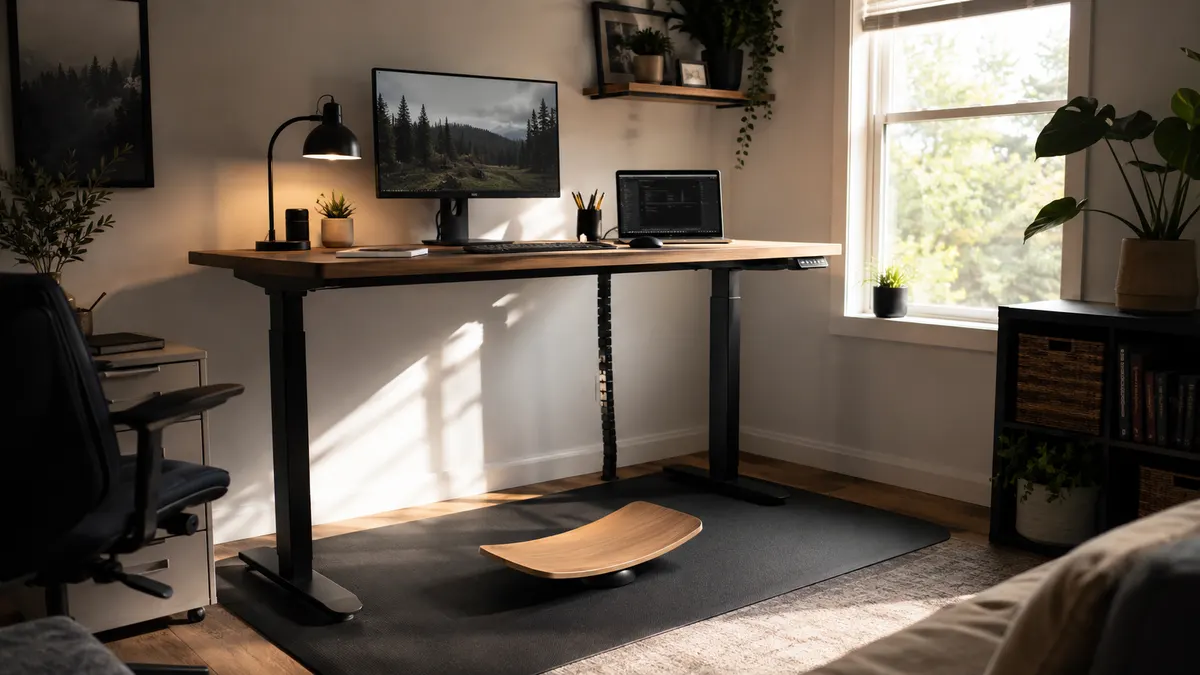
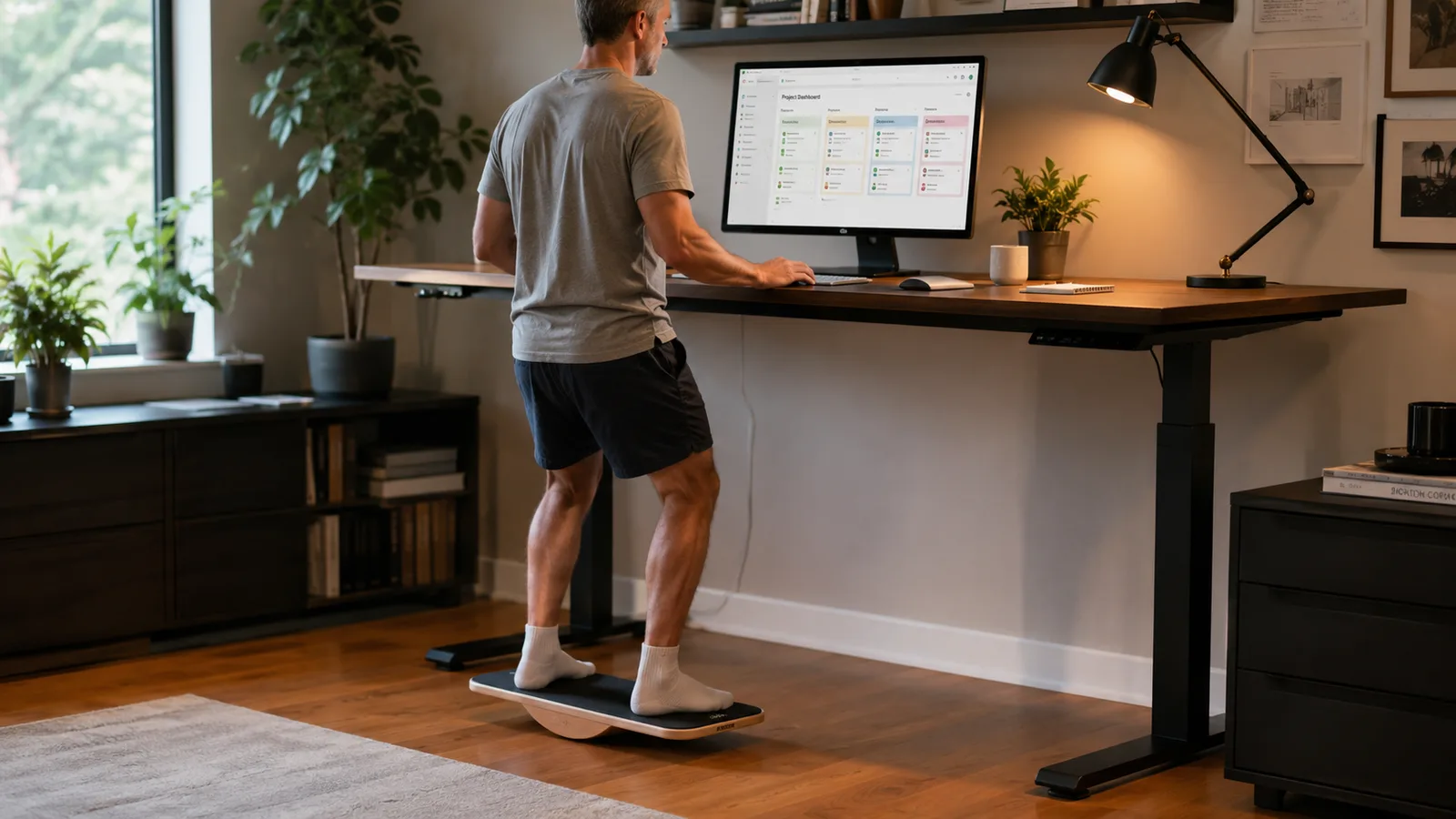
My setup is simple: a manual standing desk in the spare bedroom I turned into an office back in 2018, a 27-inch monitor, and now the StrongTek board sitting on the floor mat right where my feet land when the desk is raised. I don't use it every minute I'm standing. I use it specifically during the parts of the day where I'm not typing much, listening more than talking, like our Tuesday and Thursday project standups or the weekly client status call.
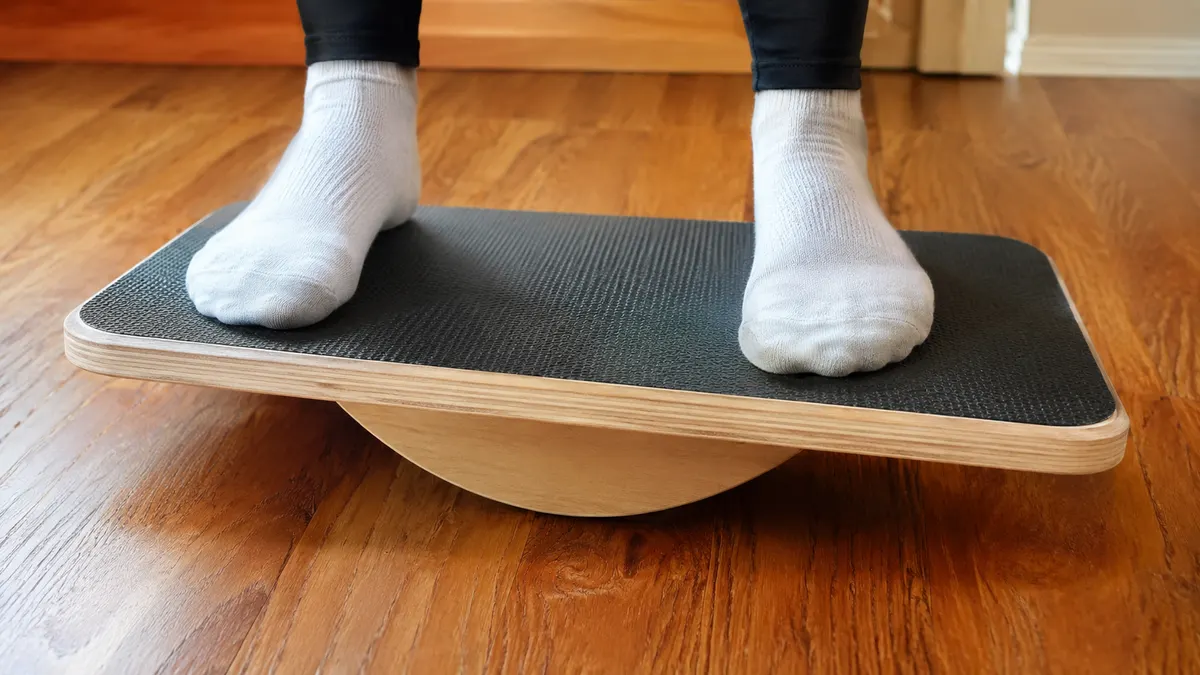
The StrongTek board has two sides, and that's the part most reviews skip past. Flip it one way and you get the basic rocker mode, which tilts front to back and side to side but has a mild curve that limits how far it can go. Flip it the other way and you get the 360-degree wobble mode, which lets the board roll in any direction and takes real balance to control. I started on rocker mode exclusively for the first month.
By month two I was doing full hour-long meetings on rocker mode without thinking about it, the same way you stop thinking about pedaling a stationary bike after enough reps. Wobble mode is a different animal. I still don't use it during calls where I'm presenting, because it genuinely demands attention. I save wobble mode for solo work blocks, reading through tickets or documentation, where a little extra focus on my feet isn't a liability.
Build Quality: What Solid Maple Actually Gets You
I've owned a cheap plastic wobble board before this one, bought years ago for a home workout kick that lasted about three weeks. That thing flexed under my weight and squeaked with every shift. The StrongTek board is nothing like it. It's built from what StrongTek lists as natural maple, roughly 15.75 inches across, and it feels like furniture, not a fitness toy. There's real weight to it when you pick it up off the floor.
The top surface has a shallow ridged texture pressed into the wood, not a rubber pad glued on top. That matters over time because glued pads eventually peel, especially with socked feet sliding on them every day. Five months in, mine hasn't shown a single spot of lifting or wear on that textured surface. I checked again this week specifically to write this section, ran my thumb across it, and it still feels like it did the day it arrived.
The underside has a rubber ring that contacts the floor in rocker mode, which is what stops it from sliding on my hardwood. I was worried about scuffing early on, so I put a thin rubber floor mat underneath, mostly out of habit from years of rolling office chairs on the same floor. StrongTek's own claimed weight capacity covers me comfortably at 190 pounds with room to spare, and I've never felt like I was pushing the limits of what it can hold.
The Learning Curve Nobody Mentions
Here's the part I wasn't ready for. The first week on the StrongTek board, even on the gentler rocker setting, I was noticeably worse at multitasking. I'd catch myself staring down at my feet during a call instead of the screen, correcting my balance instead of taking notes. My project lead actually asked on a call in early March if everything was okay because I kept going quiet mid-sentence. It was just me trying not to tip over.
That adjustment period lasted about ten days for me. I'd read some Amazon reviews before buying that mentioned a break-in period, and I mostly brushed it off, figuring how hard could standing on a piece of wood really be. Turns out your ankles and calves are doing real, if quiet, work the entire time, work they're not used to doing during a normal standing desk day, and that took some getting used to.
By week three the correcting motion had become automatic, the same way you stop consciously thinking about balancing on a bike. That's when the StrongTek board actually started earning its spot on my floor instead of feeling like a chore I'd assigned myself. I'd genuinely forget it was under my feet during a 45-minute call, which sounds like a small thing but was the whole point.
What Changed About My Afternoon Slump
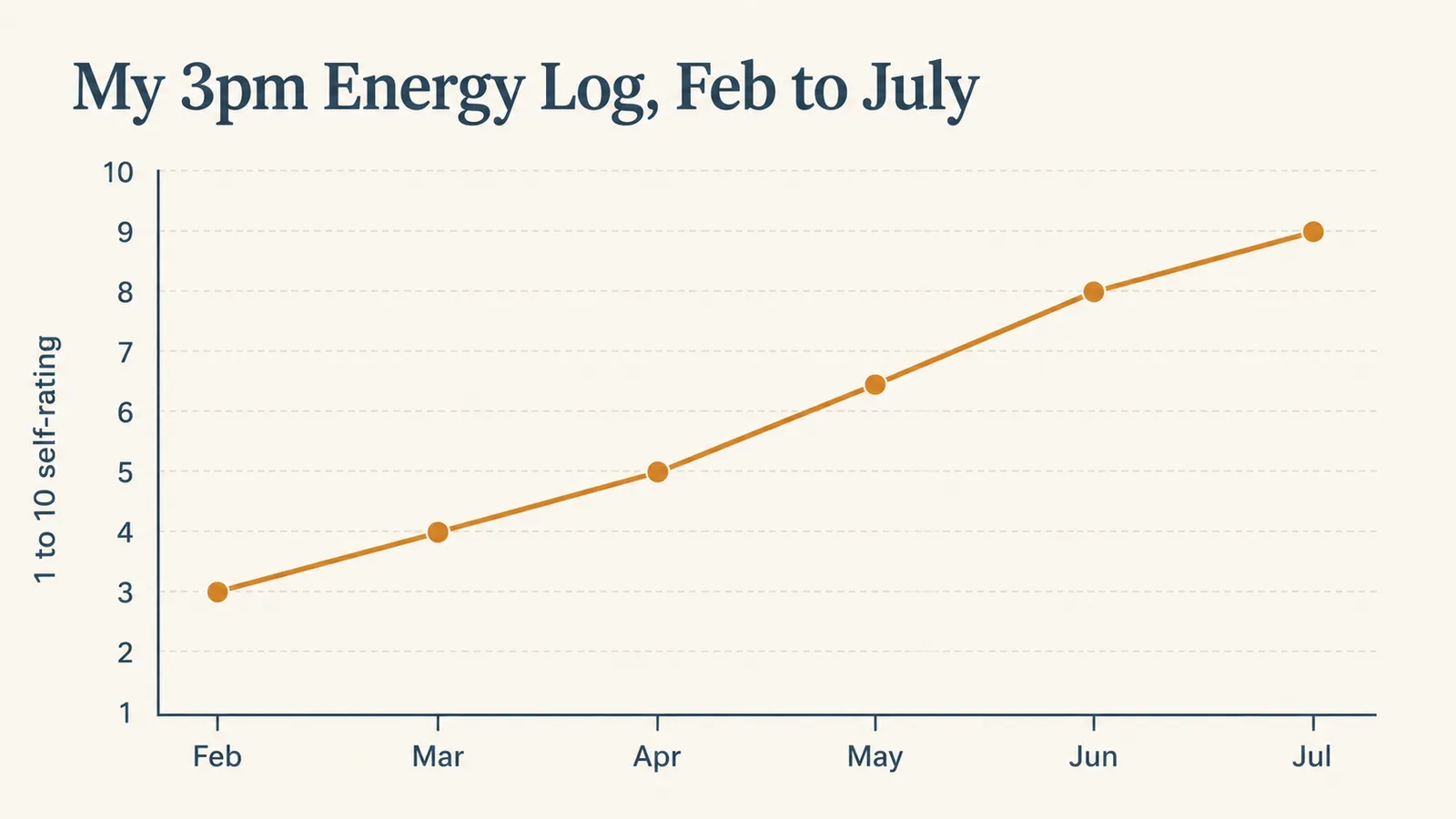
I want to be careful here, because I'm not a doctor and I'm not going to tell you a balance board fixed my metabolism or cured anything. What I can tell you is what I noticed in my own log, which I started keeping in a notes app back in February partly out of curiosity and partly because I write these reviews for a living now. Every day around 3pm I'd rate how alert I felt on a scale of 1 to 10, before I even owned the board.
In February my average 3pm rating was hovering around a 4, which for me meant staring at the same paragraph of a status report three times before it registered. By April, with the StrongTek board in regular rotation during my standing blocks, that average had crept up closer to a 6.5. I'm not claiming causation with total confidence, plenty of other things changed too, but the timing lined up closely enough that I kept using the board on purpose instead of by accident.
My working theory, and it's just a theory from one guy in a spare bedroom, is that the constant small adjustments the StrongTek board asks of your legs keep you from going into that glazed, motionless state that static standing eventually turns into anyway. It's not a workout. It's more like fidgeting with purpose. Whatever it is, my 3pm slump stopped being a guaranteed part of the day.
Five Months of Daily Wear
I use the StrongTek board somewhere between three and five days a week, usually for one to two hours total spread across calls and reading blocks, so this isn't a board that's been sitting in a closet between test sessions. It gets real, repeated daily use in a home office that also has a dog who occasionally decides the board makes a fine napping spot.
The wood itself shows almost no cosmetic wear. There's a faint scuff near one edge where I dropped a laptop charger cable clip on it back in April, but nothing from actual use. The rocker curve hasn't flattened or loosened, and the wobble side still moves with the same resistance it had on day one. I was fully expecting some loosening or squeaking by now based on how my old plastic board behaved, and it just hasn't happened.
If I have one durability note, it's that the rubber contact ring on the underside picks up dust and the occasional strand of dog hair, so I flip it over and wipe it down maybe once a month. That's genuinely the only maintenance the StrongTek board has needed in five months, which for a piece of furniture that lives on my office floor is about as low-effort as it gets.
Alternatives I Considered First
Before I settled on the StrongTek board, I looked at a couple of other options for adding movement to my standing desk hours. A foam balance pad was the first thing I almost bought, mostly because it was cheap and I figured foam couldn't go wrong. The reviews talked me out of it. People kept mentioning the foam compressing flat within a few months under daily weight, which sounded like the exact problem I was trying to avoid with my old plastic wobble board.
I also seriously considered an under-desk pedal exerciser, the kind with a small flywheel you pedal like a stationary bike while you work. It looked appealing on paper, but I do a lot of calls where I'm on camera, and a visibly pedaling motion under the desk felt like a distraction waiting to happen during a client meeting. The StrongTek board won out because it's silent, it doesn't move unless I move, and nobody on a video call has ever noticed I'm using it.
The other factor was footprint. Both the foam pad and the pedal exerciser needed a permanent spot on the floor because of their shape. The StrongTek board leans flat against the wall behind my desk when I'm not using it, which matters more than I expected in a spare bedroom that still has to double as a guest room when my in-laws visit twice a year.
What I Liked
- Solid maple construction with no flex or creaking after five months of near-daily use
- Two difficulty modes in one board, rocker and 360-degree wobble, without buying two products
- Textured non-slip surface pressed into the wood instead of a glued pad that can peel
- Compact enough to store standing against a wall when not in use
- Kept me moving during standing desk hours without pulling attention off screen work once I adjusted
Where It Falls Short
- Real learning curve, expect about ten days before it stops competing with your focus on calls
- Wobble mode is genuinely too distracting for calls where I'm presenting or sharing my screen
- No strap or add-on resistance bands included if you want more than balance work
- Bare or hard-soled shoes feel less secure on it than socks or bare feet did for me
It stopped being something I had to remember to use. It became the thing my feet automatically found whenever the desk was up and I wasn't typing.
Who This Is For
If you already have a standing desk and you've noticed you just plant your feet and go still for long stretches, the StrongTek board is a low-cost way to change that pattern. It's also a solid fit if you spend a lot of your day on calls where you're mostly listening rather than typing, since that's exactly the kind of stretch where a board like this fits in without becoming a distraction. Anyone who liked the idea of an under-desk balance product but didn't want a bulky plastic wobble cushion taking up floor space will likely appreciate how compact the StrongTek board is when it's leaned against the wall.
Who Should Skip It
If you don't have a standing desk, this isn't the product to buy first, since it's built around already being on your feet at a raised desk, not a sitting setup. If your calls are mostly ones where you're presenting, screen sharing, or leading the conversation, you'll probably find the adjustment period more disruptive than it's worth, at least at first. And if you have any existing balance or ankle concerns, I'd talk to a doctor before adding any balance training device to your day rather than taking my word, or any Amazon review, as a substitute for that.
Give Your Standing Desk Hours a Reason to Move
Five months in, the StrongTek board is still the first thing my feet find when I raise the desk for a call. If you're standing still all day anyway, see today's price and current stock on Amazon.
Amazon Check Today's Price on Amazon →