
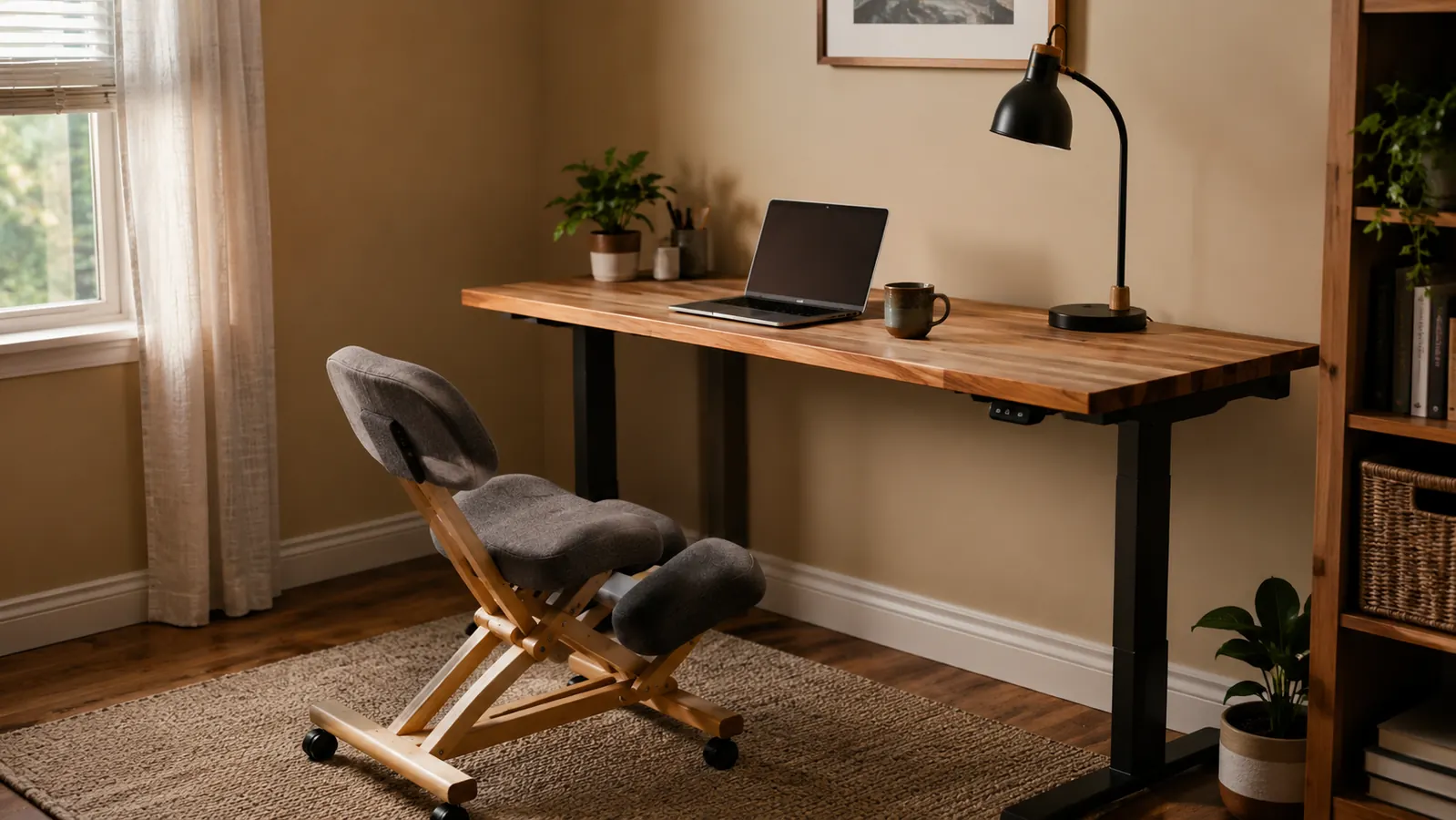
I've worked from the same spare bedroom for eight years now, and for most of that time my posture looked like a question mark by 2pm. I tried a lumbar pillow, I tried "just sitting up straighter," I tried setting hourly reminders on my phone that I ignored within a week. None of it stuck, because none of it changed the actual mechanics of how I was sitting.
What finally did was a NYPOT ergonomic kneeling chair. Not because it's magic, it's a padded seat and a set of knee rests on a rocking base, but because it makes slouching physically harder to do than sitting up straight. Here are ten specific ways it changed how I hold myself at my desk, based on months of actually using it, not just reading the box.
The chair that makes slouching the harder option
Most posture fixes ask you to remember to sit up straight. The NYPOT kneeling chair changes the geometry so slouching takes more effort than sitting upright does.
Amazon Check Today's Price on Amazon →It opens your hip angle instead of closing it
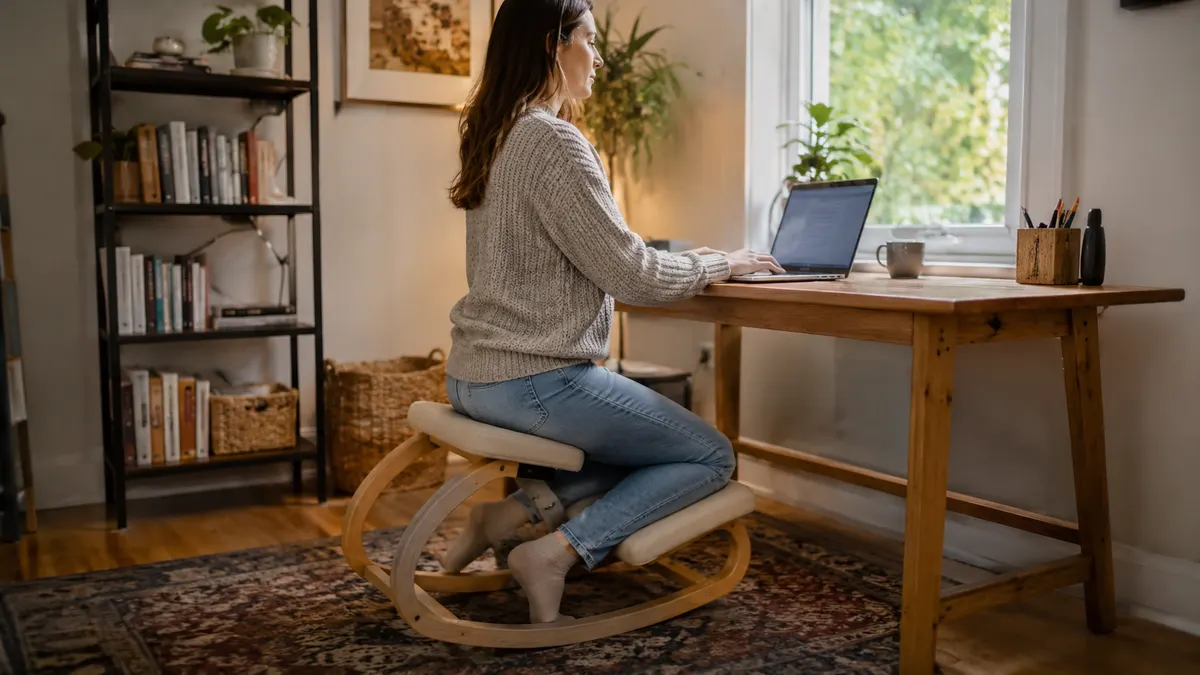
A regular desk chair puts your hips at roughly 90 degrees, which is exactly the angle that tips your pelvis backward and rounds your lower spine into a C. The NYPOT kneeling chair opens that hip angle to something closer to 110 to 130 degrees. Your torso naturally stacks more vertically over your hips instead of folding forward. I noticed this in the first week, my shoulders just sat further back without me trying to pull them there.
There's no backrest to lean on, so you stop leaning
This sounds like a downside until you live with it. My old office chair had a backrest I sank into by 10am, and once you're sunk into a backrest your core checks out completely. The kneeling chair has nothing behind you. Your spine has to do the work of holding you up, which felt tiring for about four days and then just became normal posture.
It shifts weight off your tailbone and onto your shins
On a flat chair, all your weight stacks down through your tailbone and sit bones. On the NYPOT, a portion of that weight moves forward onto the padded knee rests. That redistribution is a big part of why my lower back stopped aching by mid-afternoon, there's simply less pressure concentrated in one spot for eight hours straight.
It keeps your core lightly switched on all day
Without a backrest, small stabilizing muscles along your spine and abdomen stay mildly engaged the whole time you're seated. It's not a workout, I want to be clear about that, but it's a different baseline than the total muscular shutdown that happens when you're propped against cushioning. My posture between meetings improved because those muscles were already doing low-level work instead of starting from zero.
It tilts your pelvis into a more natural forward position
Standard chairs encourage what's called a posterior pelvic tilt, hips rocked back, lower spine flattened out. The kneeling posture does the opposite, it tilts the pelvis slightly forward, which restores the natural inward curve of your lower back. That curve is what your spine is built to hold when you're standing, and the kneeling chair gets you closer to that shape while still seated.
The adjustable seat angle lets you dial in your own fit
One thing I appreciate about the NYPOT specifically is the seat angle adjusts, it's not a fixed-angle wedge. I run mine at a moderate tilt because I'm at my desk seven or eight hours a day and a steeper angle got uncomfortable by hour five. Someone using it for two-hour writing blocks might prefer a steeper tilt for more of the posture benefit. Being able to change that yourself instead of buying a fixed design matters more than I expected.
Padded knee rests keep the shin pressure from becoming a distraction
I was worried this style of chair would just trade back pain for knee pain. The knee pads on the NYPOT are thick enough that after the first couple of weeks I stopped noticing them entirely. Thin knee support is where a lot of cheaper kneeling chairs fall apart, literally and posture-wise, because you start shifting your weight backward to escape the discomfort, which undoes the whole point of the design.
It has a smaller footprint than my old task chair
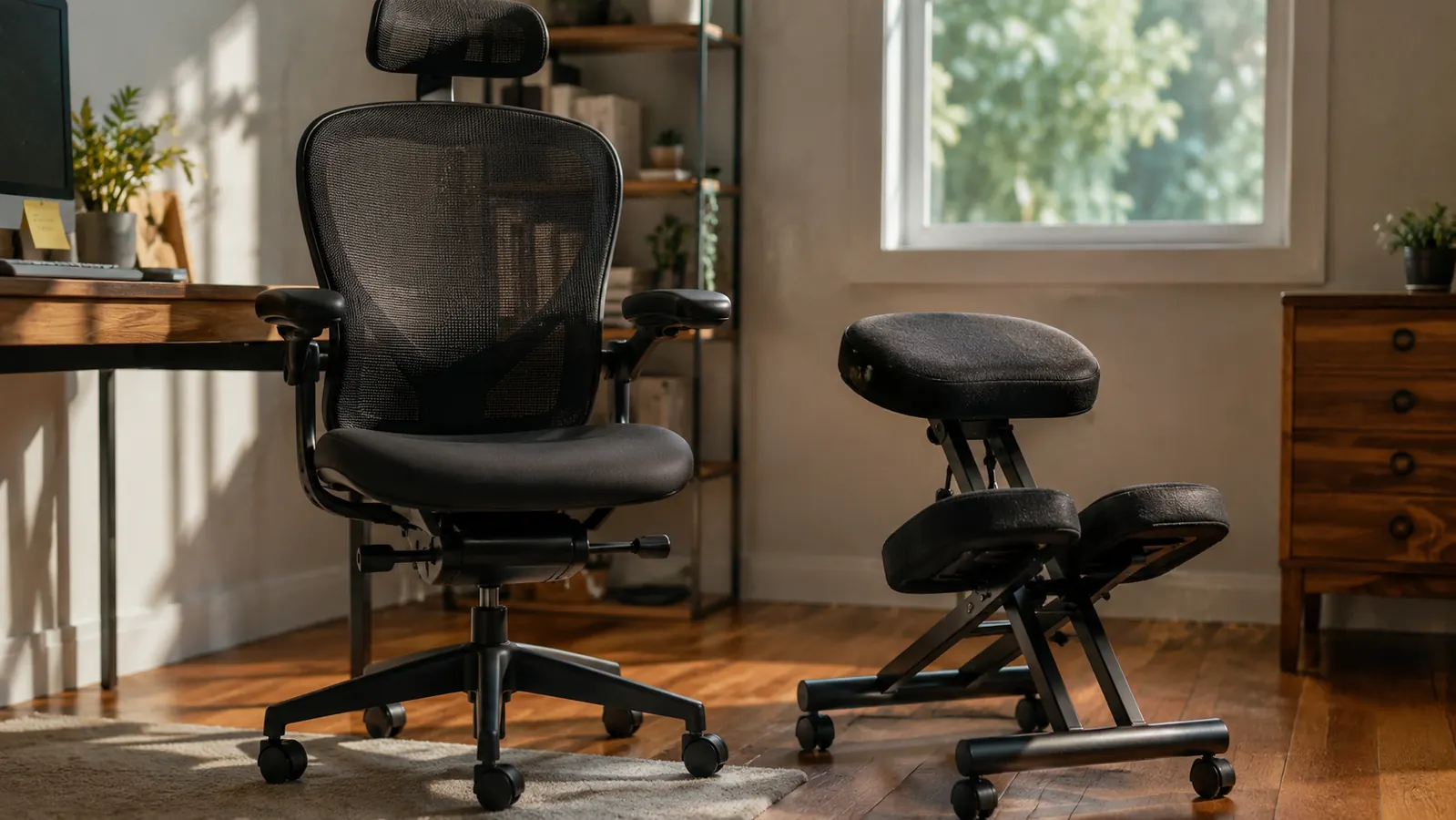
My office is a converted spare bedroom, so square footage is real money to me. The kneeling chair takes up noticeably less floor space than a full task chair with arms and a headrest. It slides under the desk lip when I'm not using it, which keeps the walkway to my closet clear. Small detail, but in a cramped home office it adds up.
The rocking base keeps you shifting instead of freezing in one position
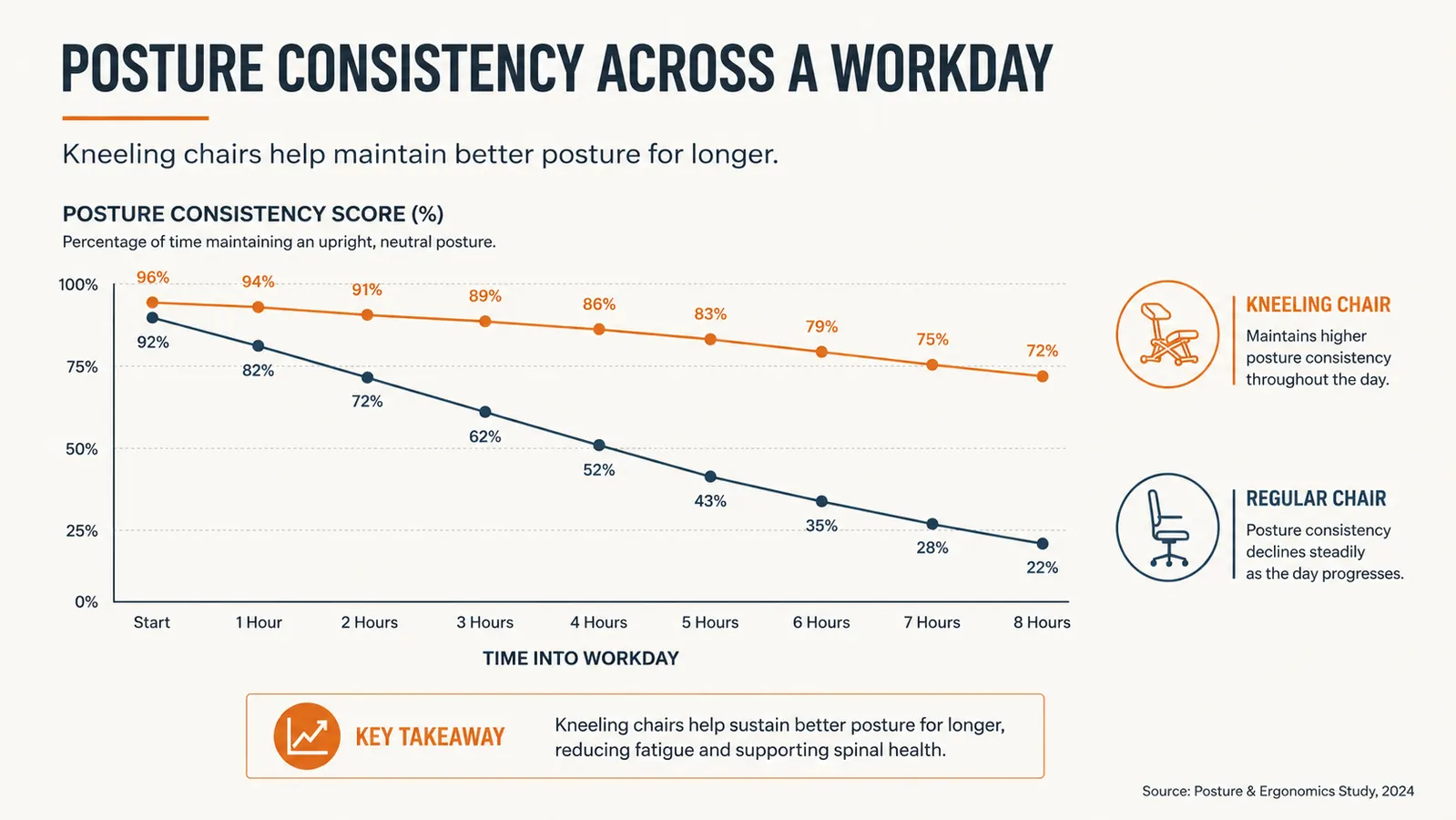
The NYPOT's base rocks slightly forward and back rather than staying rigid. That small range of motion means I'm constantly making tiny adjustments through the day instead of locking into one static position for two hours during a stretch of back-to-back calls. Staying static is a big part of what makes posture worse over a long workday, so a chair that nudges you to keep moving is doing real work in the background.
It works best as a rotation, not a replacement
This is the reason I've stuck with it. I don't sit on the NYPOT all day, I use it for two or three stretches, usually mid-morning and mid-afternoon, and swap back to my regular chair the rest of the time. Alternating between the two postures keeps either one from becoming its own new bad habit. The kneeling chair functions as a reset button for my spine, not a permanent seat.
None of these ten changes happened overnight. It took roughly three weeks of short, deliberate sessions before sitting on the NYPOT felt normal instead of like an exercise. If you're weighing a kneeling chair against another round of lumbar pillows and posture reminders, know that the adjustment period is real, but so is the difference once your body adapts to it.
What I'd Skip
I won't pretend this chair works for everyone. If you have existing knee issues, the pressure on the knee pads can be uncomfortable no matter how well padded they are, and I'd talk to a doctor before trying one. If you need one chair that does everything for a full eight-hour day with no rotation, a kneeling chair alone probably isn't it, your legs and shins will tell you to get up long before your workday is over. And if you're shopping on price alone, know that the cheapest kneeling chairs I tried before this one had thin, unpadded knee rests that made the whole experiment miserable within a week.
The chair didn't fix my posture. It just made bad posture harder to fall into by accident, which turned out to be the part I actually needed.
Give your spine a reason to sit up straight
I still keep my regular chair. I just don't reach for it as often. If your afternoon slouch has become the default, the NYPOT kneeling chair is worth adding to the rotation.
Amazon Check Today's Price on Amazon →