
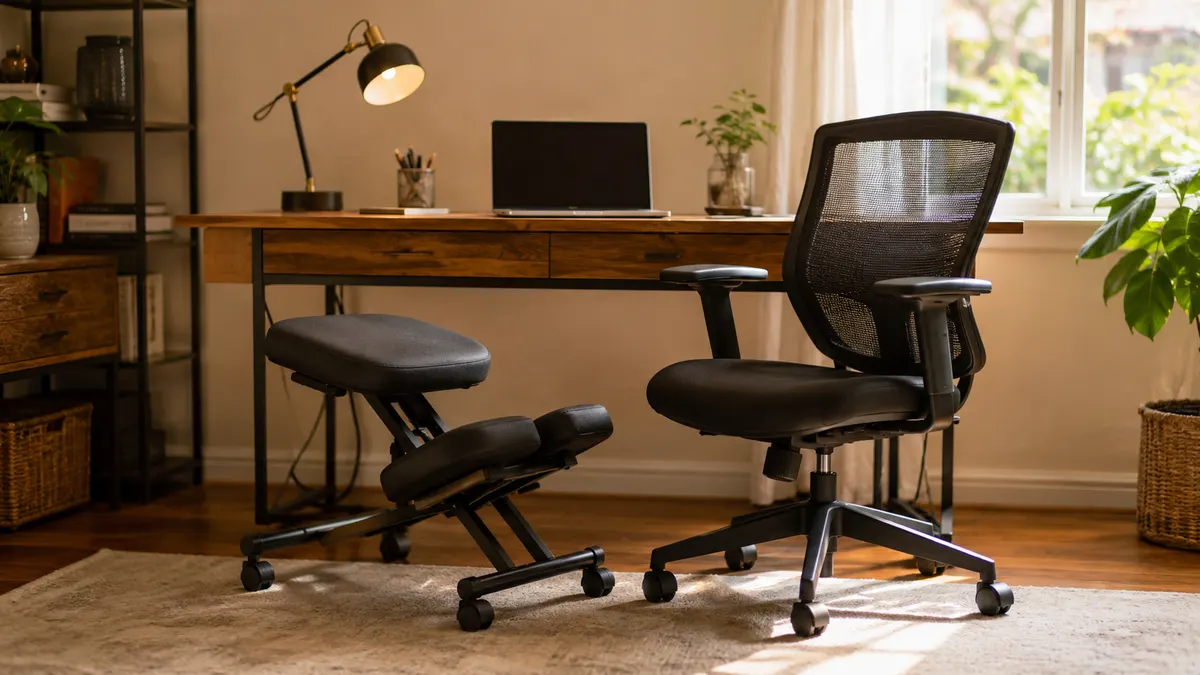
I'm Nate Colburn. I've worked remote IT project management for eight years out of a converted spare bedroom, and in that time I've cycled through six different chairs trying to solve the same problem: my lower back locks up by 2 PM no matter how much lumbar support the chair claims on the box. About five months ago I added the NYPOT Ergonomic Kneeling Chair to my setup, and I still use it today, on purpose, for specific parts of my day rather than as a full replacement for my regular office chair.
If you're standing where I was, staring at a kneeling chair listing and wondering whether it actually beats a normal office chair, here's the honest short answer. It depends entirely on what you're doing at your desk that hour. I've run both chairs side by side on the same desk for the same stand-ups, the same deep-work blocks, and the same back-to-back meeting days, and the results split in a pretty clear pattern once you look at real hours logged instead of marketing copy.
Tired of your back reminding you it's 2 PM?
The NYPOT Kneeling Chair changed how my spine sits during focused work blocks, no desk changes required. Check today's price on Amazon before you decide.
Amazon Check Today's Price on Amazon →| Spec | NYPOT Kneeling Chair | Regular Office Chair |
|---|---|---|
| Typical Price | Check today's price on Amazon | Wide range depending on brand, from budget to premium |
| Frame Material | Powder-coated steel with bent wood accents | Steel or aluminum frame, mesh or fabric shell |
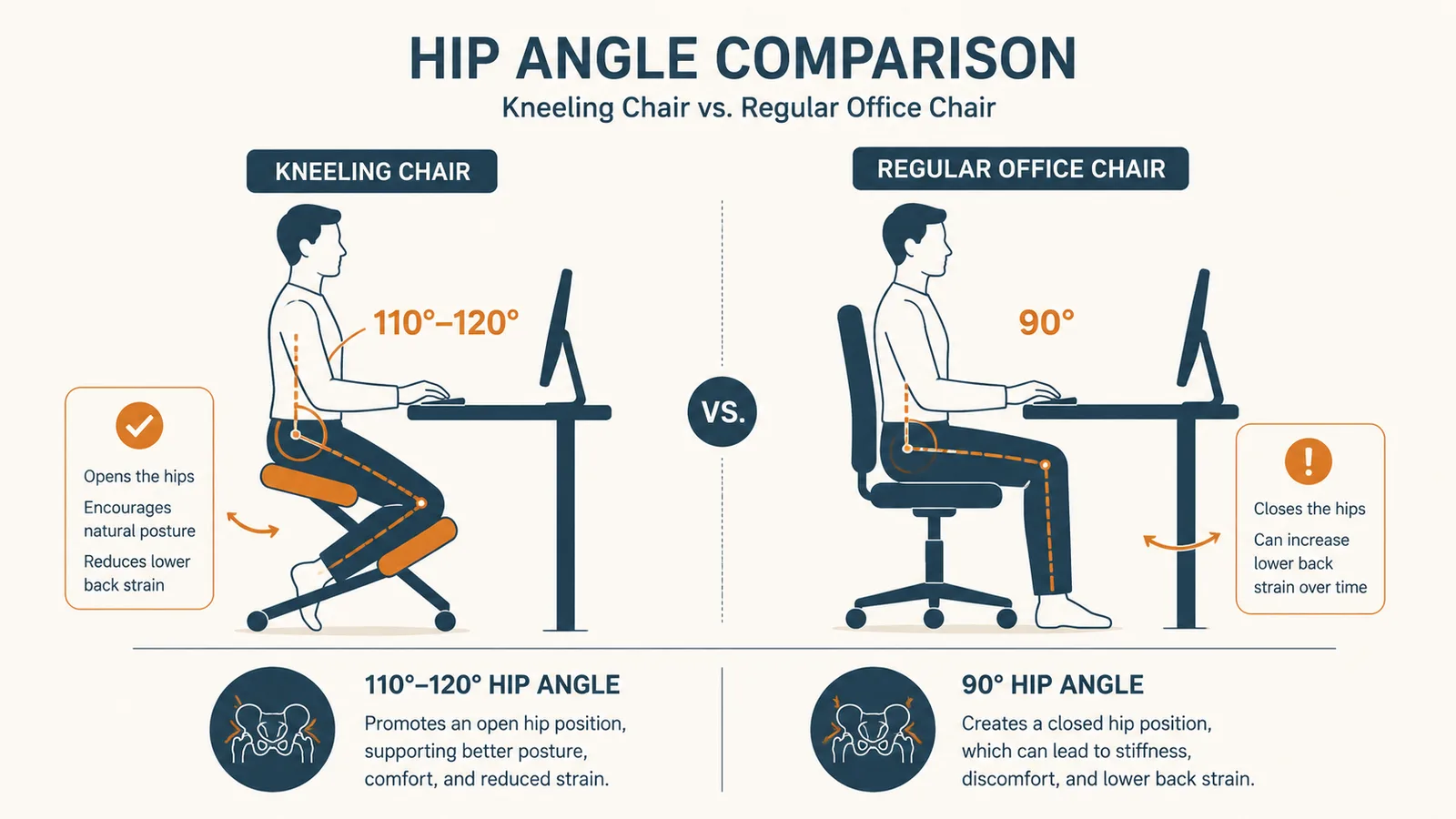
| Hip Angle | Open, roughly 110 to 120 degrees | Seated, roughly 90 degrees |
| Backrest | None, core and lower back stabilize you | Reclining backrest with adjustable lumbar |
| Adjustability | Seat height and tilt, 2 to 3 positions | Height, tilt, armrests, lumbar, often headrest |
| Weight Capacity | 250 pounds | Typically 250 to 300 pounds |
| Assembly | About 20 to 30 minutes, basic tools | About 30 to 45 minutes, more parts |
| Warranty | 5 years | Typically 1 to 3 years |
| Best For | Short focused work blocks, posture reset | Full 8-hour days, back-to-back video calls |
Where the NYPOT Kneeling Chair Wins
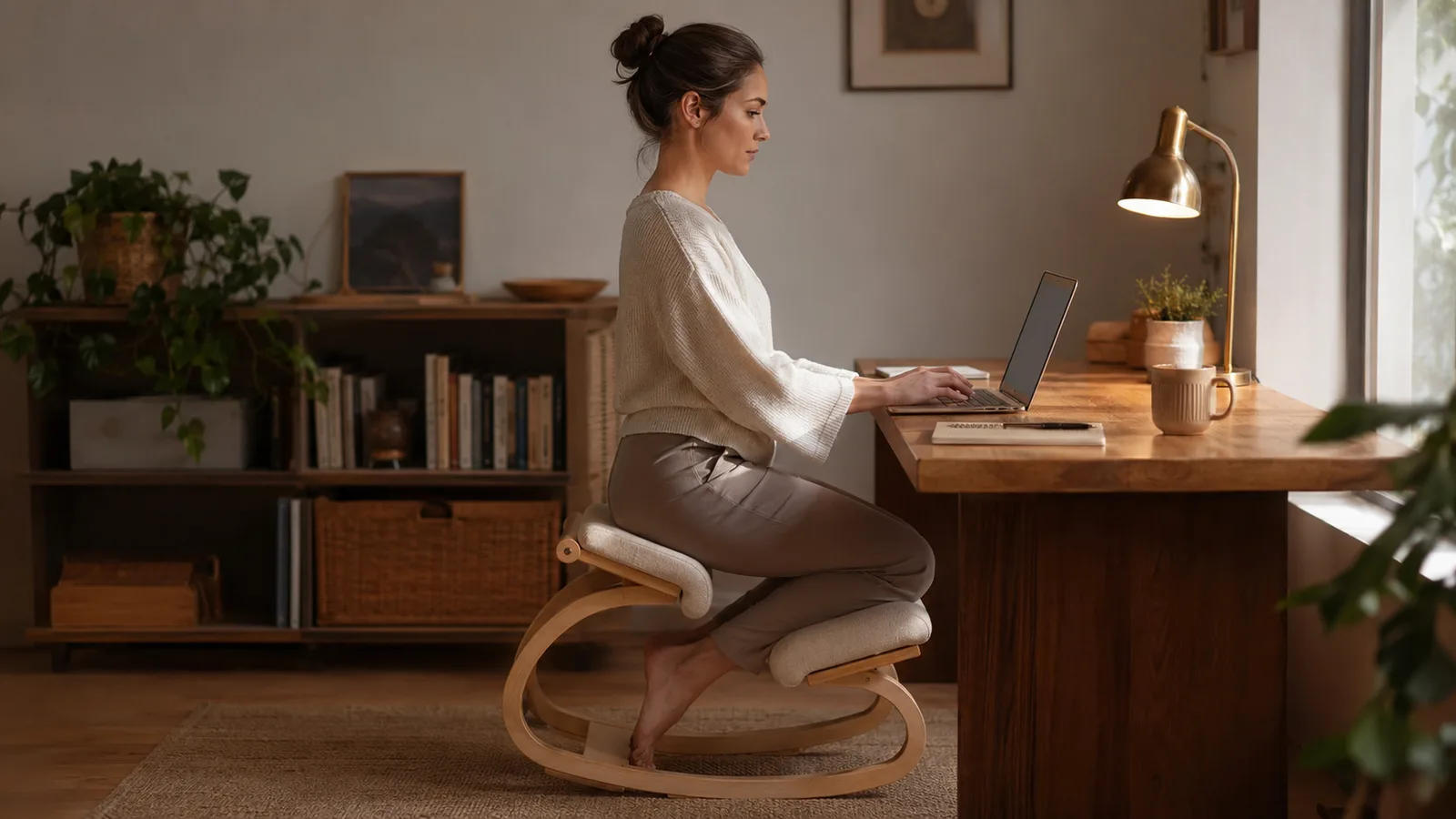
The biggest difference shows up in my hips, not my back. A regular office chair puts your hip angle at roughly 90 degrees, which is close to the exact position that tightens your hip flexors after a few hours and pulls your pelvis into a slouch. The NYPOT chair opens that angle to somewhere around 110 to 120 degrees because you're kneeling on the lower pad instead of sitting flat against a seat. That small shift does something I didn't expect going in: it makes slouching physically harder to do. I can't collapse into my screen the way I used to on my old chair, because the kneeling position itself keeps my spine stacked over my hips without me having to think about it.
It also just takes up less room, which matters in my setup. My office is a converted spare bedroom, roughly 10 by 11 feet, and desk space has always been tight. The NYPOT has no armrests sticking out and a smaller overall footprint than my old office chair, so it tucks under the desk cleanly when I'm not on it. The build quality surprised me too for a budget chair. The frame is a mix of powder-coated steel and bent wood, it's rated for 250 pounds, and NYPOT backs it with a 5-year warranty, longer than the 1 to 3 years I've seen on most office chairs in this same price range. At month five of daily use, the padding hasn't flattened and the frame hasn't developed any wobble.
Where a Regular Office Chair Wins
I'm not going to pretend the kneeling chair replaced my office chair, because it didn't. On days packed with back-to-back video calls, four or five meetings stacked from 9 to 3, I'm back in my regular office chair every single time. It has a reclining backrest, real lumbar support I can adjust to the exact curve of my spine, and armrests that hold my forearms up during long typing stretches. The NYPOT gives you none of that. There's no backrest at all on most kneeling chair designs, including this one, so your core and lower back are doing the stabilizing work the entire time you're on it. That's fine for 45 minutes. It's not fine for a full workday.
A regular office chair also just fits more bodies without any learning curve attached. My knees are fine, but my wife tried the NYPOT for a week and her knees ached by day three, she has an old soccer injury that makes kneeling positions uncomfortable no matter how much padding is under her. An office chair has no such requirement. You sit down and you're comfortable within the first five minutes, no adjustment period, no sore shins. If you've got knee problems, a bad ACL, or you're recovering from any kind of leg surgery, a regular office chair is the safer call, full stop, and no kneeling chair review should tell you otherwise.
Ready to stop slouching through your workday?
The NYPOT Kneeling Chair is the one piece of gear that changed my posture without redoing my whole desk setup. See its current price and availability on Amazon.
Amazon Check Today's Price on Amazon →How I Actually Tested Both
I didn't just sit in each chair for ten minutes and call it a comparison. I used the NYPOT kneeling chair for a rotating block of my workday, usually the first two hours in the morning when I'm doing focused solo work like status reports or project planning, for five straight months. My regular office chair, a standard ergonomic model I'd already owned for two years, stayed at the same desk for every meeting-heavy afternoon. Same desk height, same monitor distance, same room, so the only real variable was which chair I was on.
I also tracked something less scientific but still useful: how often I caught myself slouching. I set a phone reminder to check my posture every 45 minutes for three weeks. On the office chair, I caught myself slumped forward or leaning on one armrest roughly two out of every three checks. On the NYPOT, that dropped to about one in five, mostly late in a long kneeling session when fatigue started creeping in. That gap is the whole reason I still use the chair five months later.
The Real Cost of Ignoring Desk Posture
I used to treat back pain as just part of the job, something you stretch out on a Sunday and forget about by Monday. Then I had a week last spring where the ache moved from my lower back into my hip, sharp enough that I couldn't sit through a 90-minute planning meeting without shifting every few minutes. My doctor didn't diagnose anything dramatic, just told me flatly that eight hours a day in one static position was the real issue, not any single chair. That conversation is what actually got me looking at kneeling chairs in the first place, not an ad in my feed.
A chair that changes how you sit for two or three hours a day is cheap compared to a physical therapy copay, which is where I was headed if nothing changed. It's not a miracle fix, and I'm not claiming it solved anything on its own, it just removes one of the easiest ways to slouch through a workday without noticing. For anyone who's spent a few years ignoring the same ache I did, that's worth more than the price tag suggests.
The Adjustment Period Nobody Mentions
Here's the part most kneeling chair pages leave out entirely. The first two weeks are rough. My shins were sore by day four, not painful exactly, more like the ache you get after a long walk in new shoes. The NYPOT's lower pad has more cushion than the bare wood kneelers I tried years ago, but you're still putting weight through your shins and knees in a way your body isn't used to. I started at 30 minutes a session and worked up to two hours at a stretch by week three. If you buy this chair expecting to sit on it eight hours on day one, you'll hate it, and it'll end up folded in a corner of the garage by month two.
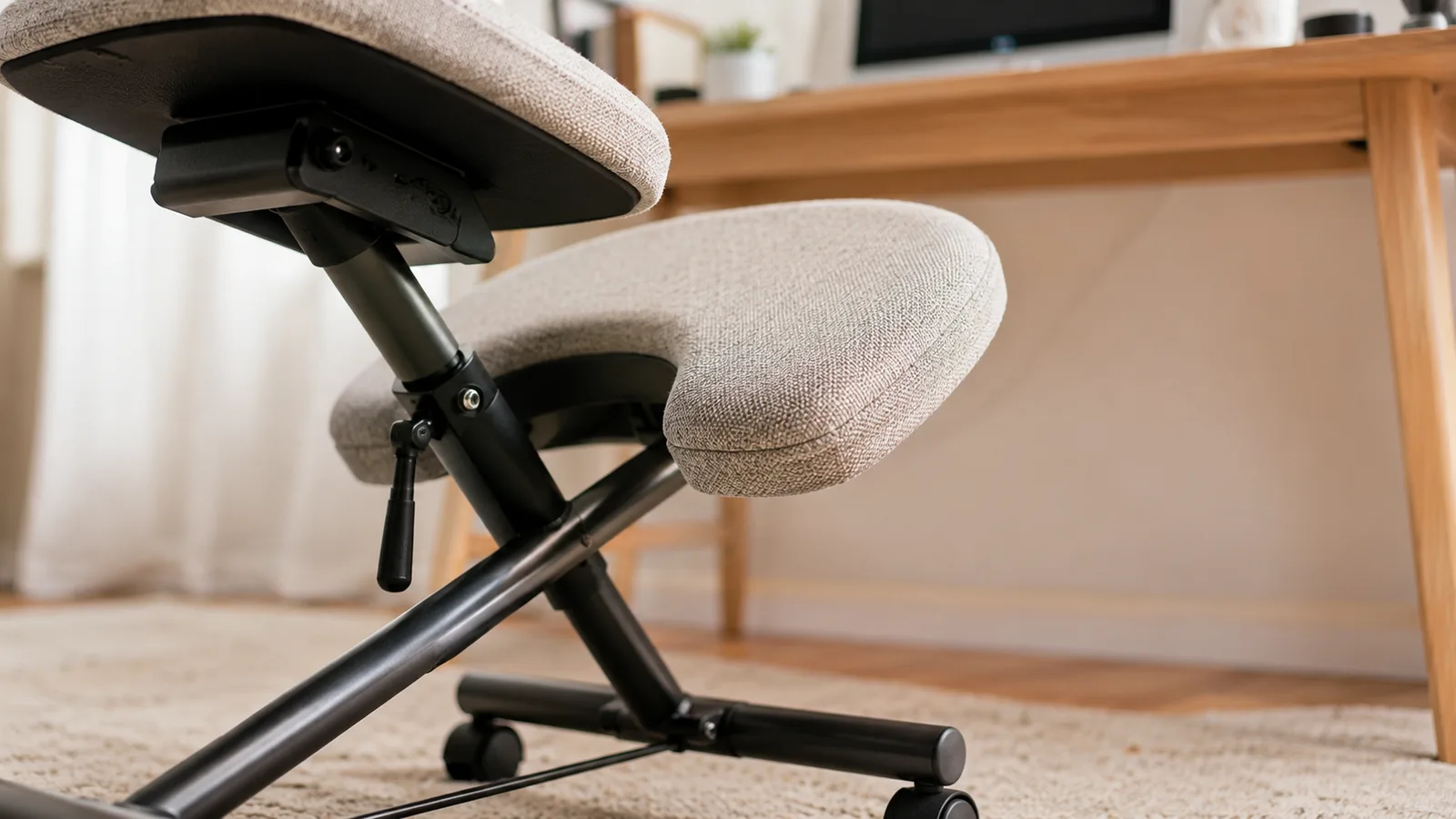
The seat height and tilt do adjust, and that helps. I run mine a notch lower than the default so my knee pad carries less weight and more of it stays on the seat pad. Small tweak, made a real difference around week two. If you have sensitive knees or you're carrying more than 220 pounds, plan on that adjustment window running closer to four weeks than two, and don't judge the chair off your first few sessions.
The kneeling chair didn't fix my back on its own. It made it physically harder to sit in the slouched position that was causing the problem in the first place.
Who Should Buy the NYPOT Kneeling Chair
If your workday is mostly deep, heads-down work broken up by short walks, or you're the type who slouches without realizing it until your back reminds you around lunch, the NYPOT kneeling chair earns its spot at your desk. It's also a smart second chair even if you keep your existing one, which is exactly how I use mine now, kneeling chair for solo focus blocks in the morning, regular chair for meeting-heavy afternoons. It's a reasonable pick too if you're short on desk space and want something that tucks away without armrests catching on the drawers.
It's also worth it if you're the kind of person who forgets to take breaks. I used to go two, sometimes three hours without standing up once I got locked into a project plan. The NYPOT doesn't let you get that comfortable staying still, your legs start signaling before your back does, which nudges me up and moving more often than my office chair ever did. That's turned into three or four extra stretch breaks a day I wasn't taking before, and that alone might matter more than the posture angle itself.
Who Should Buy a Regular Office Chair
If your day is wall-to-wall video calls, you have any knee, hip, or lower back issue that makes kneeling positions uncomfortable, or you just want to sit down once in the morning and not think about your chair again until 5 PM, stick with a regular office chair that has solid lumbar support and adjustable armrests. There's no shame in that choice. Comfort that requires zero adjustment period has real value, especially if you're not going to swap chairs mid-afternoon the way I do. It's also the better call for anyone sharing a chair with a partner or roommate, since a regular chair adjusts to different bodies far more easily than a kneeling chair does.
It's also the better choice if you share your workspace, or if guests or coworkers use your desk on occasion. A regular office chair adjusts to a wide range of heights and body types in seconds. Handing someone the NYPOT and asking them to figure out the kneeling position, find their seat height, and get comfortable in the next five minutes before a meeting starts just isn't realistic. If your home office doubles as a spot other people sit down at, even occasionally, a standard chair is the lower-friction option every time.
Who Should Buy Which
Buy the NYPOT kneeling chair if you want a posture reset for focused work blocks and you're willing to give it two to four weeks to feel normal. Buy a regular office chair if your day is dominated by long meetings, you have knee or hip concerns, or you want one chair that just works from minute one with no learning curve. For my desk, and for most of the remote workers I've recommended a setup change to over the past year, the honest answer is both, used for different parts of the day, not one replacing the other.
See why 738+ home office workers rated the NYPOT 4.3 stars
If deep-focus posture is your problem, not video-call marathons, this is the chair that actually addresses it. Check today's price and current availability on Amazon.
Amazon Check Today's Price on Amazon →