
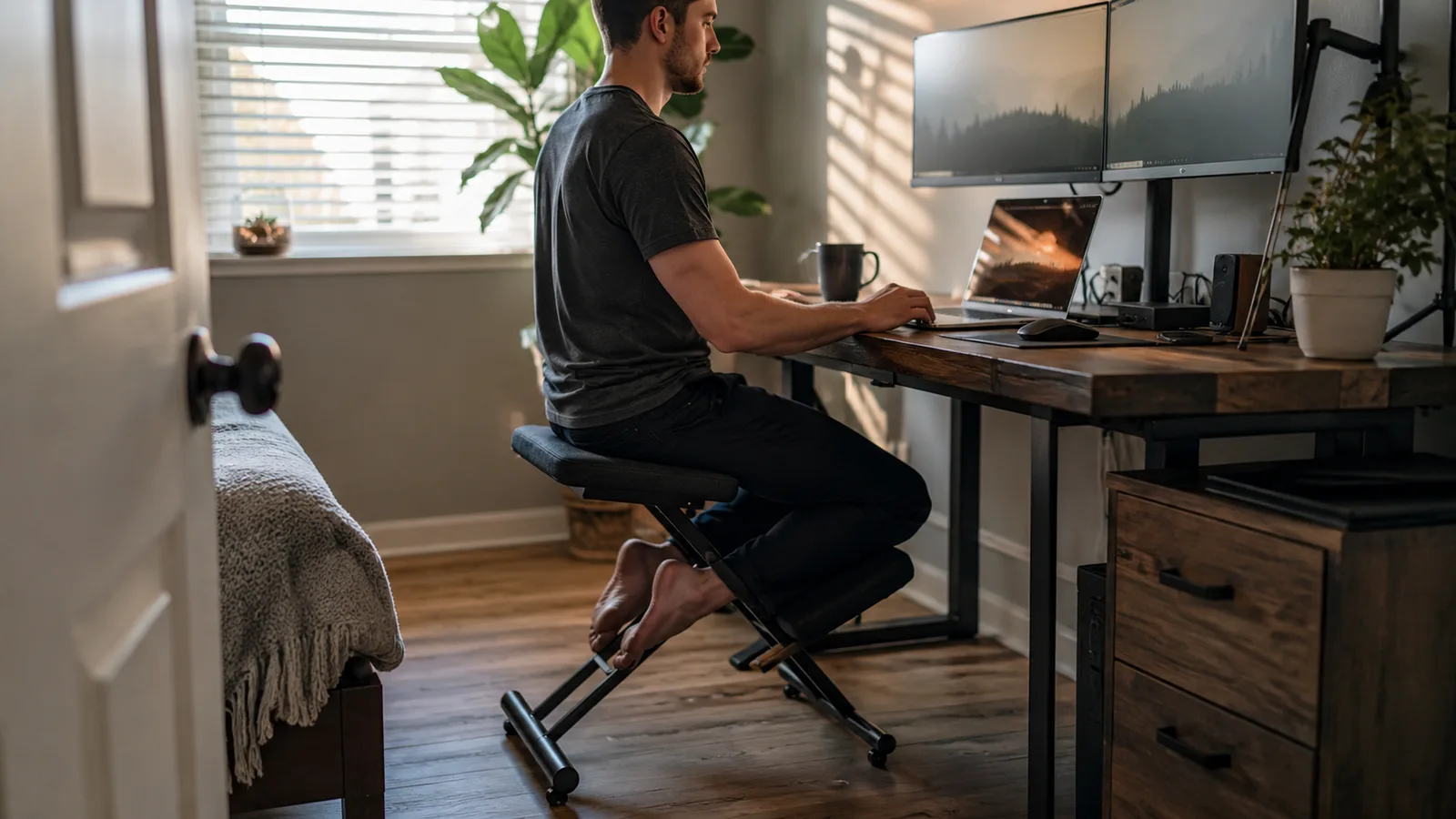
My name is Nate Colburn. I've spent eight years working remote IT project management out of a spare bedroom in my house, and for most of that stretch I sat in one chair for eight, sometimes ten hours a day without thinking much about it. Then a physical therapist my wife works with saw a photo of my desk setup over my shoulder during a video call and asked, half joking, if I was trying to fuse my hips shut. That comment stuck with me longer than I expected. Within a week I'd ordered the NYPOT Ergonomic Kneeling Chair, an adjustable knee chair that splits your weight between a padded shin rest and an angled seat instead of sitting flat all day, mostly because it was the cheapest way I could find to actually change how I sit instead of just reading another article about it.
That was six months and roughly a thousand hours of desk time ago. I've run standups on it, sat through two-hour architecture reviews on it, written status reports on it, and swapped back to my old office chair on the days my knees needed a break. This review is what I actually noticed using the NYPOT kneeling chair as a daily work tool, not a novelty item that looked interesting in a product photo, over half a year on a real remote job.
The Quick Verdict
A sturdy, genuinely adjustable kneeling chair that changed how my lower back and hips feel by mid-afternoon, with a real adjustment period on the knees and a learning curve on the seat angle I wish someone had warned me about.
Amazon Check Today's Price →Tired of Standing Up From Your Desk Chair Feeling Stiff?
If the last hour of your workday leaves your lower back tight and your hips locked up, the NYPOT Ergonomic Kneeling Chair is the fix that got a physical therapist off my case after one honest conversation. See today's price on Amazon.
Amazon Check Today's Price on Amazon →How I've Used It
My setup is simple. The NYPOT kneeling chair sits next to my regular office chair, and I switch between the two depending on the day and how my body feels. On a typical weekday I'll start the morning on the NYPOT, work through my standup and email, then rotate to my old chair sometime after lunch once my shins start asking for a break. I didn't plan it that way going in, I assumed I'd either love it and use it exclusively or hate it and shove it in a closet, but six months in, this rotation is genuinely how it's played out.
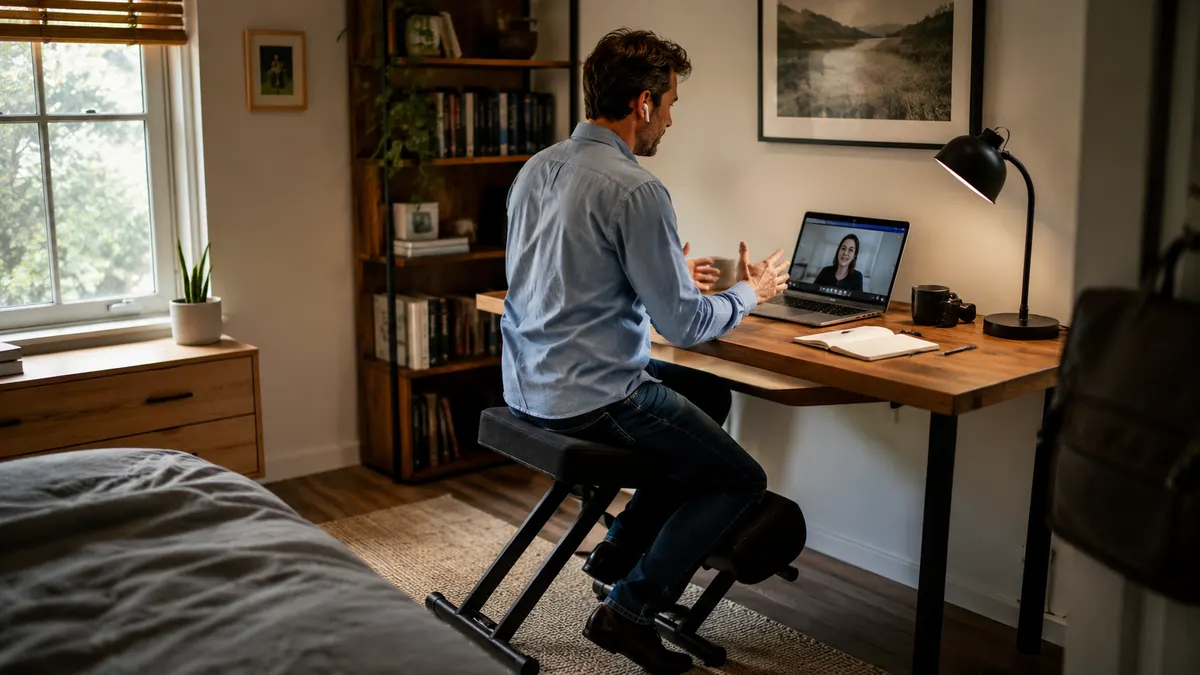
I run four to five video calls most weekdays for a mid-size logistics client migrating off an old ticketing system, plus internal planning sessions with my own team. I've sat through every kind of meeting on the NYPOT kneeling chair, from fifteen-minute standups to two-hour architecture reviews, and the biggest difference I noticed wasn't during the call itself, it was standing up afterward. On my old chair, a long meeting usually meant a few seconds of stiffness working itself out of my lower back before I could walk normally. On the NYPOT, that stiffness mostly isn't there, because I haven't been slumped in the same position the whole time.
The seat also forced a change in my typing posture I didn't expect. Because the NYPOT's angled seat tilts your hips forward, my shoulders naturally stack over my hips instead of rounding toward the keyboard the way they used to. I didn't do anything intentional to fix that, it's just a side effect of how the chair is shaped, and it's probably the single biggest change six months of use has made in how I sit.
The Build and the Adjustable Seat
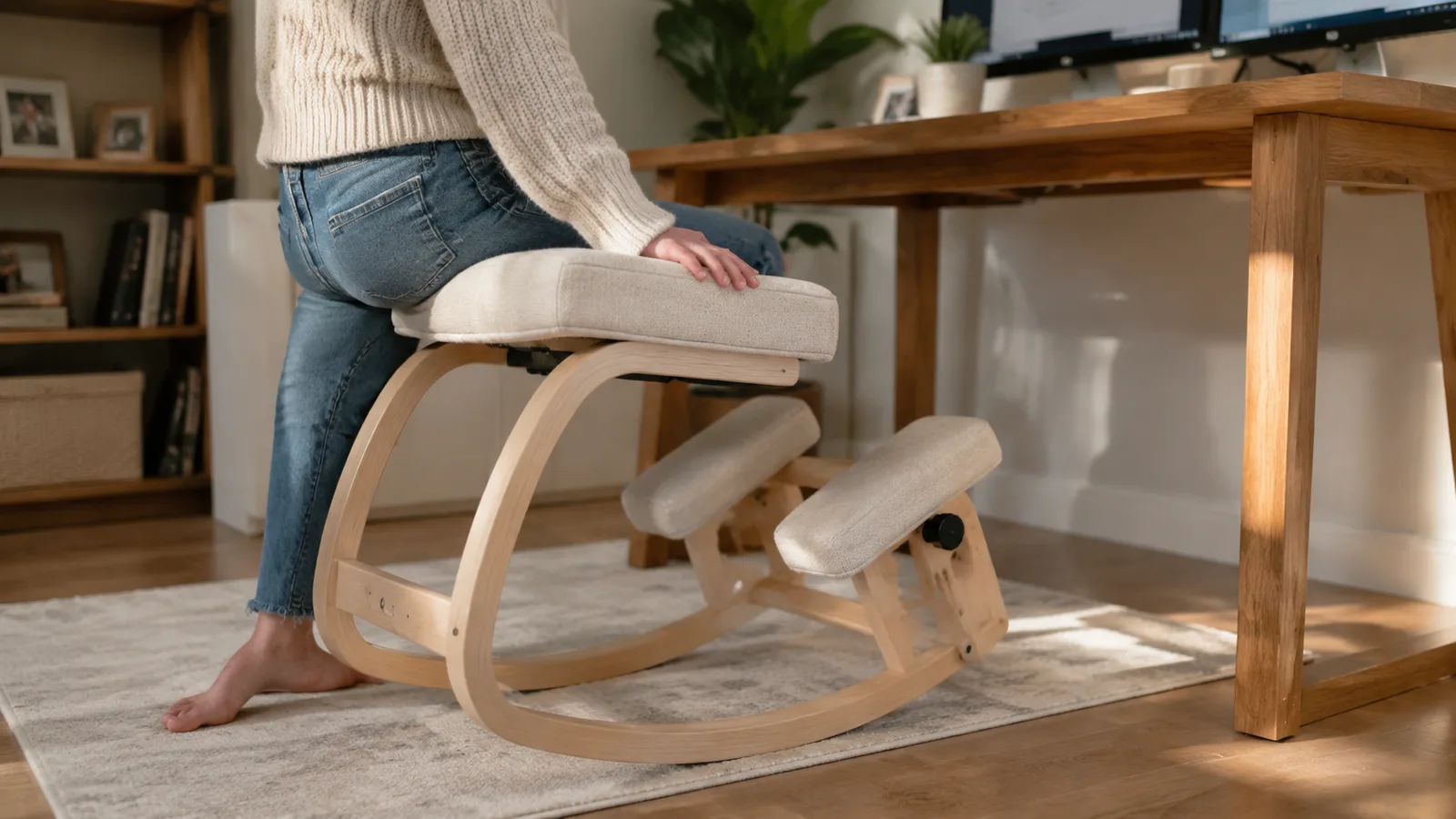
The NYPOT Ergonomic Kneeling Chair ships mostly assembled, with a metal frame, a padded seat cushion, and a separate padded shin rest that bolts on below it. Assembly took me about twenty minutes with the included hardware and a screwdriver I already owned. The frame itself feels solid once tightened down, rated for up to 250 pounds according to NYPOT's listing, and it hasn't developed any wobble or squeak in the six months since I put it together, even with the daily shifting around that comes from adjusting my position through a long call.
The seat angle adjusts through a lever on the side of the frame, letting you set how aggressively it tilts your hips forward. I started on the most upright, least aggressive setting for the first two weeks while my knees and shins got used to bearing some weight, and gradually moved it to a steeper angle once that stopped feeling like a strain. That adjustability is the reason I'd recommend the NYPOT over a fixed-angle knee chair, because your body genuinely needs a break-in period, and having a chair that can meet you where you are on week one versus week eight matters more than I expected.
The padding on both the seat and the shin rest is firm, closer to a gym mat than a couch cushion, which I was skeptical of at first but have come around on. Softer padding would compress under sustained weight and probably feel worse by hour three. The NYPOT's firmer foam has held its shape through six months of daily use without flattening out or losing support where my shins rest against it.
Six Months of Sitting Differently
The real test of any piece of office gear isn't the first week, it's whether you're still reaching for it six months later without being told to. I still am, most days, though not for the entire eight hours the way I initially imagined I would. The rhythm that's worked for me is roughly three to four hours on the NYPOT kneeling chair, then a switch to my regular chair for the rest of the afternoon. That split has done more for how I feel by 5pm than any single piece of desk gear I've bought in eight years of working from home.
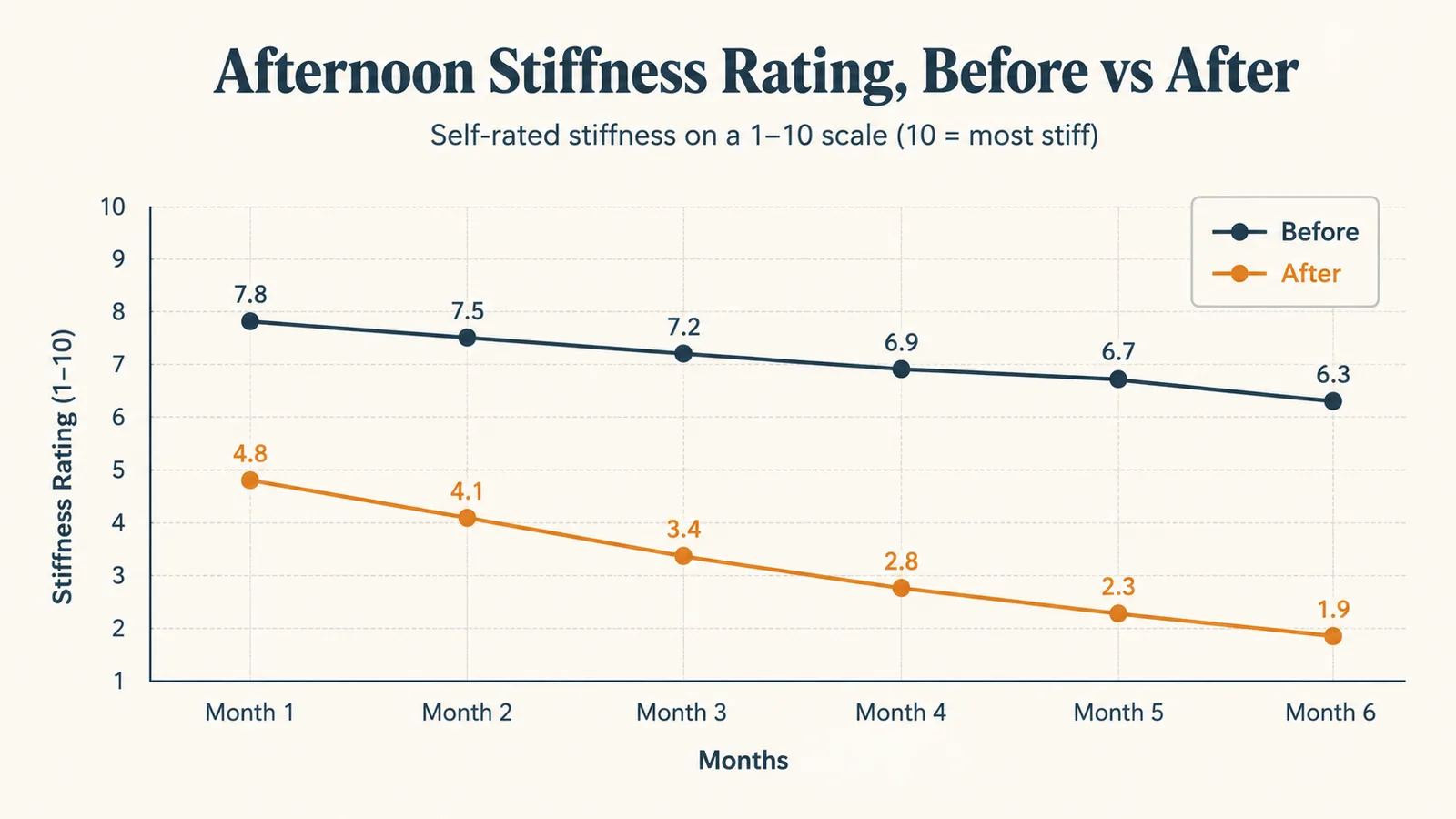
I started keeping a rough note of how stiff my lower back and hips felt at the end of the workday, rating it one to ten most evenings, mostly out of curiosity after my wife's physical therapist friend asked how it was going. In the month before I started using the NYPOT, that number averaged somewhere around a six or seven most days. Over the last two months of consistent use, it's averaged closer to a three. That's not a clinical study, it's one guy's evening notes app, and I want to be clear the NYPOT kneeling chair isn't treating or curing anything, it's just changed how my body feels sitting through a normal workday, which is exactly what I was hoping it would do.
The knees took the longest to adjust. For the first ten days or so, I noticed some soreness in my shins and the tops of my knees by the afternoon, which is common enough with kneeling chairs that I'd read about it before buying and expected it. That soreness faded almost entirely by week three as the muscles and pressure points adapted, and now I genuinely don't notice the shin rest unless I've been on the NYPOT for a stretch longer than four hours in one sitting.
Why I Considered a Balance Board Instead
Before landing on the NYPOT, I looked seriously at a standing-desk balance board, since I already own a manual standing desk and figured I'd just add movement on top of standing instead of introducing a whole new chair. Two things pushed me toward the kneeling chair instead. First, standing all day was never realistic for the volume of typing and note-taking my job requires, my accuracy on a keyboard drops noticeably when I'm not seated. Second, the NYPOT gave me an actual posture change while still sitting, which felt like a more honest fix for the specific problem, hunched shoulders and a flattened lower back curve, that the physical therapist had flagged in the first place.
I'm not going to claim the NYPOT kneeling chair replaces movement entirely, because it doesn't, I still get up and walk around between calls the same as I always did. But for the hours I am sitting, it's done more for how my body feels than a balance board would have, since a board changes your stance while standing, and my job simply isn't a standing job for most of the day.
The Tradeoffs I've Made Peace With
The biggest tradeoff is the missing back support, and I want to be upfront about it because most kneeling chair listings gloss over it. The NYPOT has no backrest at all, by design, since the whole point of the angled seat is to keep your spine upright without leaning on anything. For short stretches that's fine and honestly part of why it works, but on a call that runs long or a day where I'm already tired, I've caught myself wishing for something to lean back into for even thirty seconds. That's the main reason I rotate back to my regular chair rather than staying on the NYPOT all day.
Floor protection is the second thing I didn't think about until it became a problem. My home office has a mid-pile carpet, and the NYPOT's base feet left faint indentations after the first month of sitting in roughly the same spot every day. I picked up a cheap plastic chair mat, the same kind people use under rolling office chairs, and that solved it completely. If your office is on hardwood or tile, this probably won't come up, but carpet owners should plan for it.
Desk height matters more with the NYPOT than it did with my old chair. Because the kneeling position sits you a few inches lower relative to your hips than a standard chair does, my desk felt slightly too tall for the first week until I got used to the new angle. My desk is a fixed-height model, so I couldn't adjust it, but if I were setting this up again I'd measure my desk height against the chair's seated height before ordering, especially if your desk isn't sit-stand adjustable.
On the plus side, NYPOT backs the frame with a 5-year warranty, which is longer than most of the office gear I've bought over the years, kneeling chair or otherwise. I haven't needed to use it, the frame hardware has stayed tight without any re-tightening on my end, but knowing it's there factored into my decision when I was comparing it against a couple of cheaper unbranded knee chairs that only offered a one-year window.
What I Liked
- Noticeable drop in end-of-day lower back and hip stiffness after the initial adjustment period
- Adjustable seat angle lets you ease into the position instead of forcing a steep tilt from day one
- Sturdy metal frame with no wobble after six months of daily shifting and adjusting
- Naturally corrects hunched shoulder posture without any conscious effort
- Firm padding on the seat and shin rest has held its shape, no flattening over time
Where It Falls Short
- Real adjustment period, expect some knee and shin soreness for the first one to two weeks
- Not comfortable for a full eight-hour day, works best rotated with a standard chair
- No back support, which some people miss during longer video calls
- Assembly required, roughly twenty minutes with basic tools
In the month before I started using the NYPOT, my evening stiffness rating averaged a six or seven. Over the last two months, it's averaged closer to a three.
Who This Is For
If you spend most of your workday sitting, the way I do running IT projects for clients I mostly only see on a screen, and you've noticed your lower back or hips feeling tight by the end of the day, the NYPOT kneeling chair is worth working into your rotation. It's a good fit for anyone who wants a genuine posture change without retraining themselves to stand all day, and the adjustable seat angle makes it approachable even if you've never used a kneeling chair before. It's also held up well for me as a secondary chair, something I switch to for a few hours rather than commit to full time, which is honestly how most people I've talked to end up using one.
Who Should Skip It
If you have existing knee issues, the pressure on the shin rest is worth testing cautiously or checking with a doctor before committing, since that's exactly where the NYPOT places a portion of your body weight. And if you're looking for a single chair to replace your office chair entirely for full eight-hour days, I'd manage expectations, the NYPOT works best as part of a rotation rather than a total replacement, at least based on six months of my own use.
Ready to Stop Standing Up Stiff at the End of Every Workday?
Six months in, my evening stiffness has dropped from a six or seven down to around a three most days. The NYPOT Ergonomic Kneeling Chair is the change I wish I'd made a year sooner than I did. See today's price on Amazon before it changes.
Amazon Check Today's Price on Amazon →