
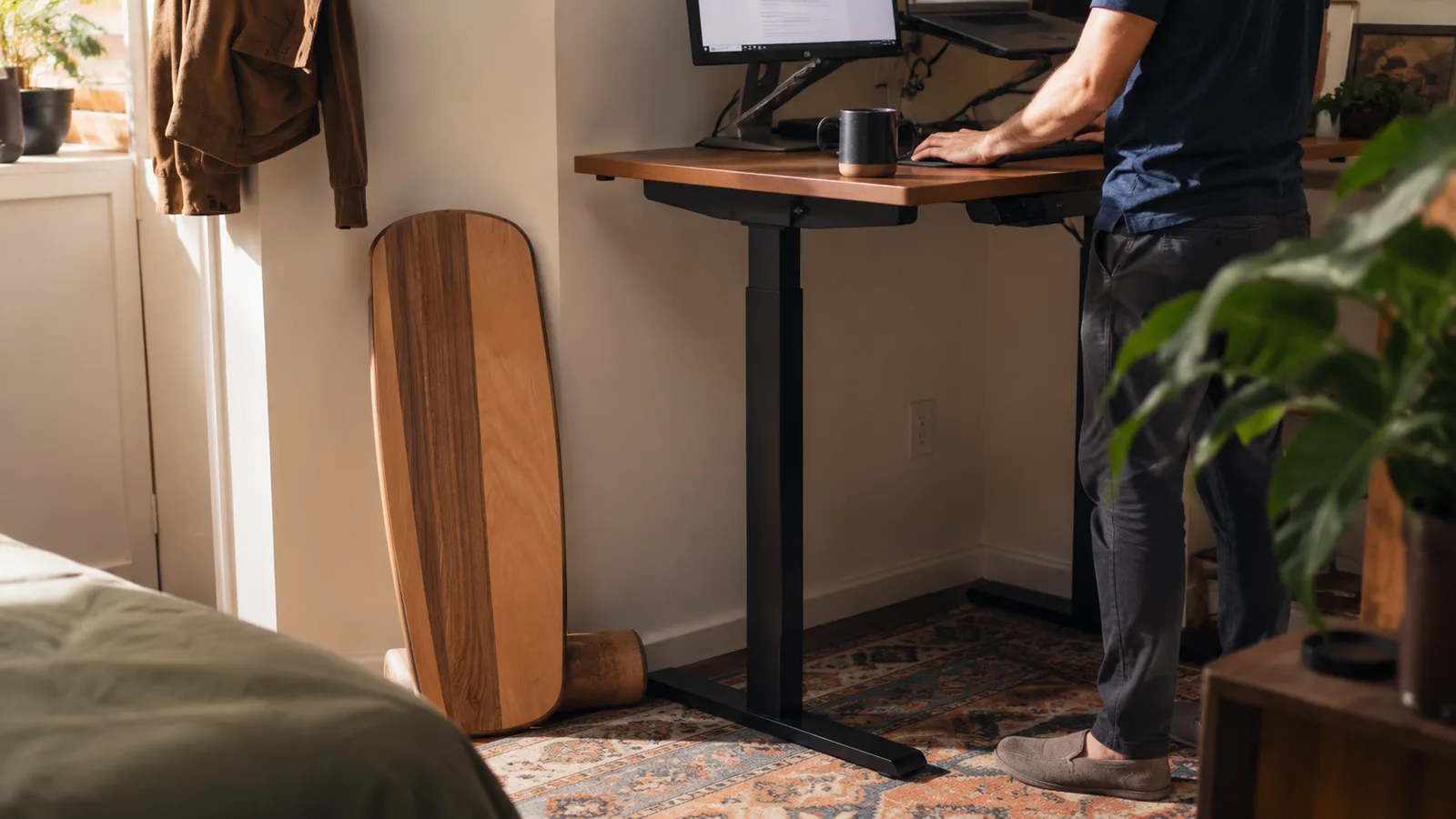
I want to get one thing out of the way before I say anything nice about this board. The StrongTek Wooden Balance Board is not the smooth, instantly-improved-my-life product the Amazon photos make it look like. I almost sent it back in the first week. It took me nearly three weeks to actually trust it under a work call, and there are a couple of design choices I still grumble about months later. So if you came here for a glowing five-star writeup, this isn't quite that. This is the review I wish someone had written before I clicked buy.
I'm Nate, I run projects for a software team, and I've worked from the same spare bedroom for eight years now. I've bought a lot of desk gear in that time, some of it good, most of it forgettable. The StrongTek board is neither. It's genuinely well made, and it's also more demanding than the listing lets on. Both things are true, and I think most reviews only tell you one half of that.
The Quick Verdict
Well built and honestly priced, but expect a rough first couple of weeks and accept that the wobble side will probably sit unused most days.
Amazon Check Today's Price →The Full Story, Not Just the Highlights
Before you decide, see what the StrongTek board actually costs today and how it's currently reviewed on Amazon. I'll cover every flaw I found below.
Amazon Check Today's Price on Amazon →Why I Bought It, and Why I Almost Returned It
I didn't buy the StrongTek board because I read some study about standing desks and micro-movement. I bought it because my knees ached by Thursday afternoon every single week, and a guy in a home office Reddit thread mentioned a wobble board helped him stop locking his legs during long calls. I ordered it on a whim on a Sunday night, half expecting to be disappointed.
It showed up two days later in a box smaller than I pictured, and my first reaction honestly wasn't great. There's no instruction card beyond a tiny printed insert, no explanation of which side is which, and the raw wood had a faint sawdust smell for the first day or two that I hadn't expected from something marketed as finished furniture-grade maple. I stood on it for maybe four minutes that first evening, nearly went sideways into my bookshelf, and set it against the wall feeling like I'd wasted thirty-some dollars.
I almost boxed it back up that Friday. What kept me going was pure stubbornness, plus the fact that the current price on Amazon was low enough that returning it felt like more hassle than it was worth. I gave it one more week before I made a final call. That decision is the entire reason this review exists, because the board I have an opinion about now is not the board I met on day one.
Looking back, the thing that almost made me return it wasn't really the board itself. It was the gap between the product photos, someone balancing effortlessly with a coffee mug in hand, and what learning an actual balance board feels like in a body that spends most of its week sitting in a desk chair. That gap between the marketing image and the real first week is, honestly, the single most misleading thing about how this kind of product usually gets sold, and it's the main reason I wanted to write this review instead of just leaving four stars and moving on.
The Part the Listing Undersells: This Takes Real Practice
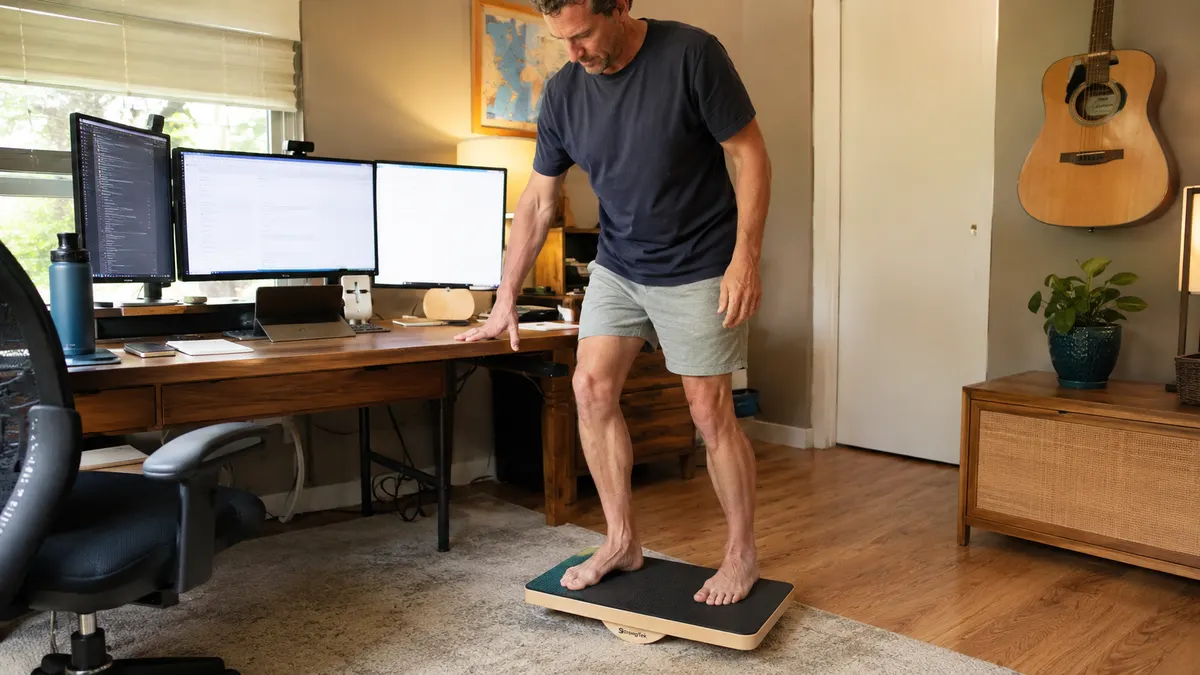
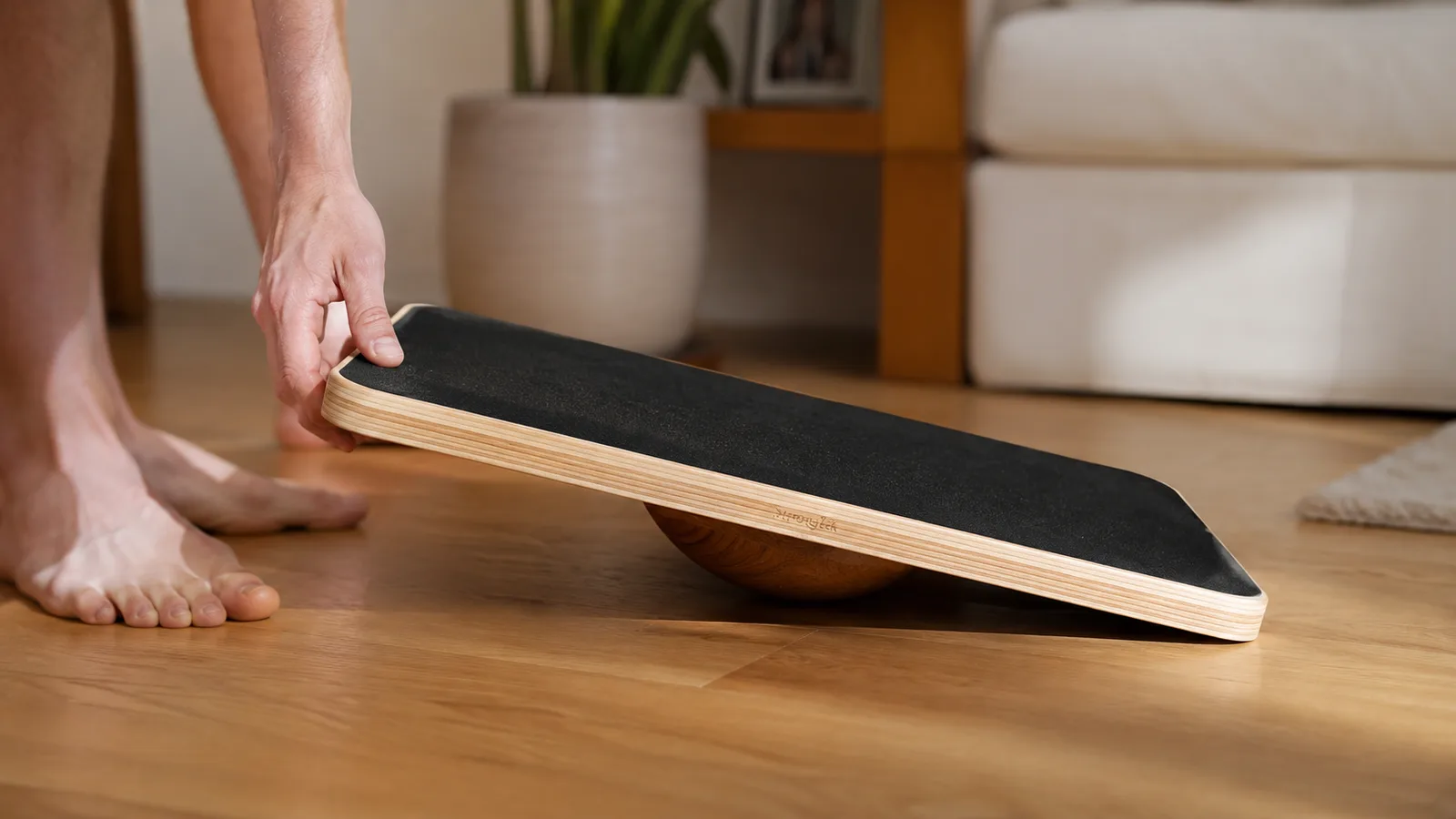
The StrongTek listing calls it a balance trainer with two difficulty options, which is technically accurate and also somehow undersells how different those two modes feel. The rocker side, where it tips front to back with a limited range, is approachable within a day or two. The 360-degree wobble side is a completely different piece of equipment. It rolls freely in any direction, and for the first two weeks I genuinely could not hold a phone call while standing on it without my voice getting shaky mid-sentence from the effort of not falling.
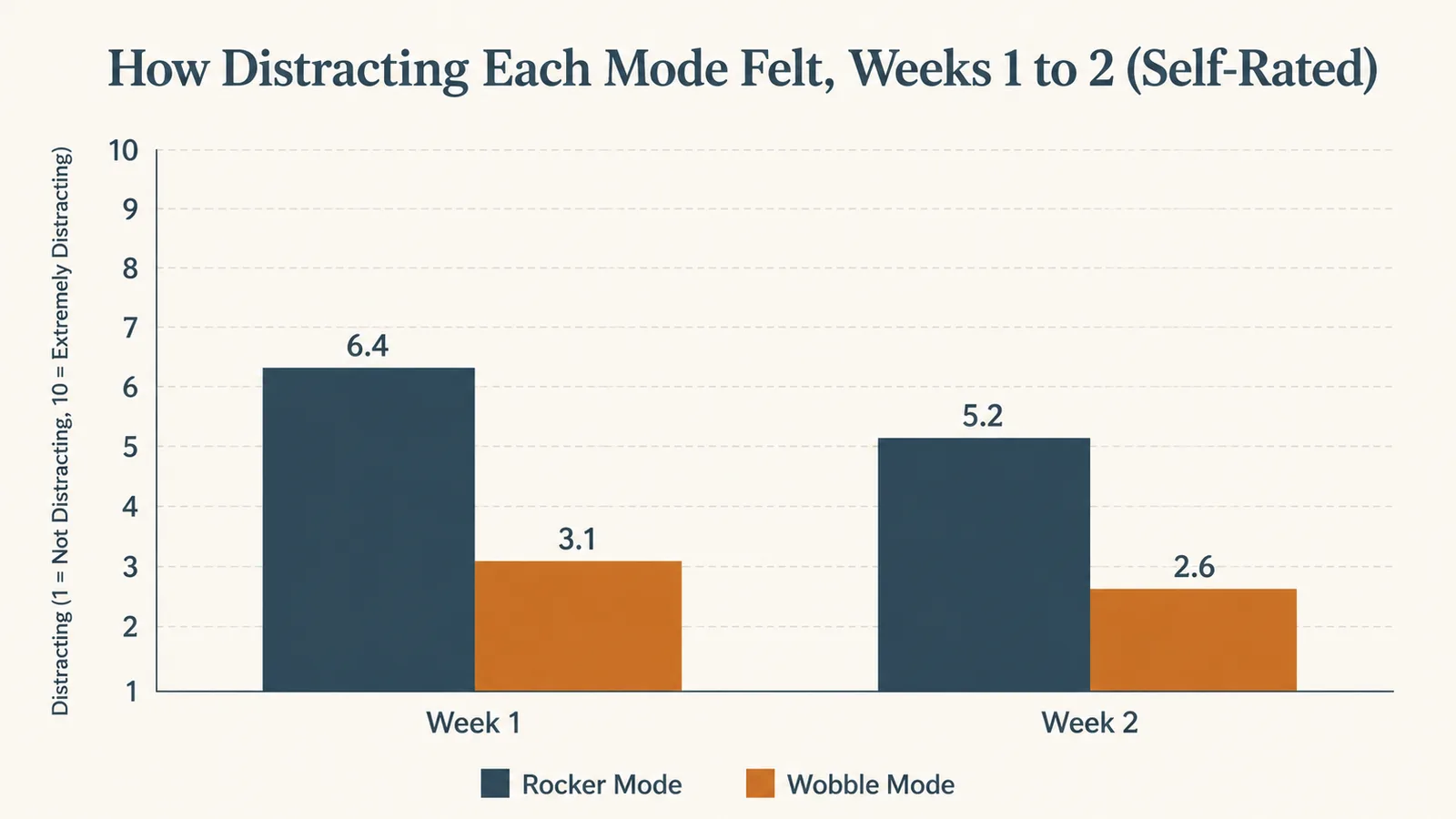
Nobody in the Amazon reviews I read before buying mentioned that the two sides have such different personalities. I assumed wobble mode was just a slightly harder version of rocker mode. It's not. Rocker mode is something you can genuinely tune out after a week of practice. Wobble mode, for me at least, never fully became background noise. Even now, months in, I still can't do a screen-share presentation on the wobble side without my cursor drifting around while I correct my footing.
The gap between the two modes shows up in recovery too, not just difficulty in the moment. After a stretch on wobble mode, my calves feel it the next morning in a way rocker mode never causes, even after a full hour-long call. That's not really a complaint, more a heads up that these are not two settings on the same dial. They're two different levels of effort, and the product photos show both sides like they're interchangeable, which they aren't.
If I'm being fully honest, wobble mode has become the setting I use maybe once a week, usually just to keep the range of motion in my ankles from getting lazy, and rocker mode is the one doing the daily work. That's a real gap between what the box promises, two equally usable modes, and what I actually got, one mode I use constantly and one I mostly avoid.
The Noise Problem Nobody Mentions
This is the flaw that annoyed me most and the one I've seen almost nobody bring up. On my hardwood office floor, the StrongTek board is loud. Not obnoxiously loud, but a distinct hollow knock every time the edge taps down, especially in rocker mode when I overcorrect. My office shares a wall with the room where my wife takes her own calls, and within the first week she asked, not unkindly, what exactly I was doing in there that sounded like someone dropping a cutting board every ten seconds.
The fix was simple once I found it. I picked up a thin rubber floor mat, the kind sold for rolling office chairs, and put the StrongTek board directly on top of it. The knocking dropped to almost nothing. But that's an extra purchase and an extra step nobody tells you to plan for, and if you've got a shared wall, downstairs neighbors, or a partner on calls near your office, I'd budget for that mat from day one instead of learning it the way I did.
The noise issue also seems tied pretty closely to floor type. The same guy from that Reddit thread has carpet over concrete in his office and told me he's never dealt with any knocking at all. So if your setup already has carpet or a thick rug under the desk, this whole section might not apply to you. Hardwood, tile, or laminate is where I'd plan on adding a mat from the start rather than waiting for a complaint from the next room like I did.
It's Marketed for Rehab. I Don't Use It That Way, and You Probably Shouldn't Either
The product title mentions core stability, ankle rehab, and physical therapy, and I think that's worth addressing directly instead of glossing over. I am not a physical therapist, I have no ankle injury, and I did not buy the StrongTek board for any kind of rehabilitation program. I bought it purely as a desk fidget tool, something to keep my legs doing small work during standing calls instead of standing dead still.
If you're actually recovering from an ankle or knee issue, I'd talk to an actual physical therapist about whether a wobble board fits into your recovery plan, and let them tell you which mode, which surface, and which supervision level makes sense, rather than taking cues from an Amazon listing or from me. For everyone else, healthy legs just looking for a low-key way to move more during a static workday, that's the lane where I think this board genuinely earns its price. I'd rather be upfront about that gap between the marketing and my actual use case than let you assume I'm qualified to vouch for something I'm not.
I bring this up because I've come across a few Amazon reviews that read like buyers were using it specifically for post-injury balance work, and I don't think a general consumer listing is the right place to be making that call without a professional weighing in first. Use the StrongTek board for what it's good at in an otherwise healthy body, casual movement during a long workday, and leave the actual rehab decisions to someone qualified to make them.
Where the Build Quality Actually Held Up
For as much as I've complained so far, I don't want to undersell the parts that genuinely impressed me, because they're a big reason I kept the board instead of returning it that first Friday. The maple StrongTek uses feels dense and substantial, nothing like the hollow, light plastic wobble cushion I tried years ago that flexed and squeaked under my weight within a month. There's no give in the wood itself, no creaking joint, no wobble that shouldn't be there.
The ridged grip surface is pressed into the wood rather than glued on as a separate pad, which matters because glued pads are exactly the kind of thing that peels at the edges after enough sock friction. Months of near-daily use later, mine still looks like it did out of the box. I've checked specifically for lifting or wear at the corners more than once, mostly out of disbelief, and found nothing.
The one build detail I didn't expect to appreciate is the weight of the thing. It's heavy enough that it doesn't slide or skitter across the floor when I step onto the edge slightly off-center, which happened constantly with my old plastic board. That extra mass is probably a big part of why the StrongTek board hasn't loosened up the way I braced myself for it to by now.
Small Annoyances That Add Up
A few smaller things bug me that I don't think should be dealbreakers but are worth knowing before you buy. There's no carrying strap or storage bag, so if you want to move it between rooms, you're carrying an awkward round wooden disc under one arm. The edges, while sanded smooth, are sharp enough on a bare shin that I've clipped mine twice reaching for something on the floor near my desk.
The rubber contact ring on the rocker side also picks up dust and pet hair faster than I expected, and if you skip wiping it down, it starts leaving faint marks on the mat underneath. None of these are reasons to skip the StrongTek board. They're just the honest, unglamorous list of things that never make it into a five-star Amazon review but that you'll notice within your first month of ownership.
I also wish it shipped with some kind of felt pad option for the underside, similar to what furniture stores sell for chair legs, since I ended up sourcing my own mat anyway. It's a minor thing, and once I solved it, it stayed solved, but it's one more small cost on top of the sticker price that the listing never flags for you ahead of time.
What I Liked
- Genuinely dense, well made maple construction with a pressed-in grip surface that hasn't peeled or worn
- Rocker mode becomes background noise within one to two weeks and works well during listening-heavy calls
- Two modes in one board without buying separate equipment
- Compact enough to lean against a wall between uses
- Fair current price on Amazon for the build quality you actually get
Where It Falls Short
- Wobble mode is far harder than rocker mode and never fully became usable for me during real work calls
- Loud on hardwood or laminate floors until you add a mat underneath, which is an extra cost the listing doesn't mention
- No carrying strap, storage bag, or written instructions beyond a small printed insert
- Sharp-ish edges that I've clipped my shin on more than once
- Marketed toward rehab and therapy use in a way I don't think most buyers should actually lean on
The rocker side became something I stopped noticing. The wobble side never let me forget it was there, and months later, that's still true.
Who This Is For
If you already have a standing desk, spend real chunks of your day on calls where you're mostly listening, and you're patient enough to push through a rough first couple of weeks, the StrongTek board is a solid, honestly built product for a fair current price. It's also a good fit if you've been burned by a cheap plastic wobble cushion before and want something that will still feel solid a year from now instead of squeaking apart.
Who Should Skip It
Skip it if you're expecting an easy, no-effort product out of the box, because the adjustment period is real and I wouldn't want anyone surprised by that the way I was. Skip it if your calls are mostly ones where you're presenting or sharing your screen, since even after months of practice, wobble mode still pulls my attention. And skip it if you're shopping for it as a rehab or therapy device rather than a casual desk fidget tool. That's a conversation for a physical therapist, not an Amazon review.
Now You Know What You're Actually Getting
Solid build, real learning curve, a couple of honest flaws. If that trade-off still sounds worth it, check today's price and current availability of the StrongTek board on Amazon.
Amazon Check Today's Price on Amazon →