
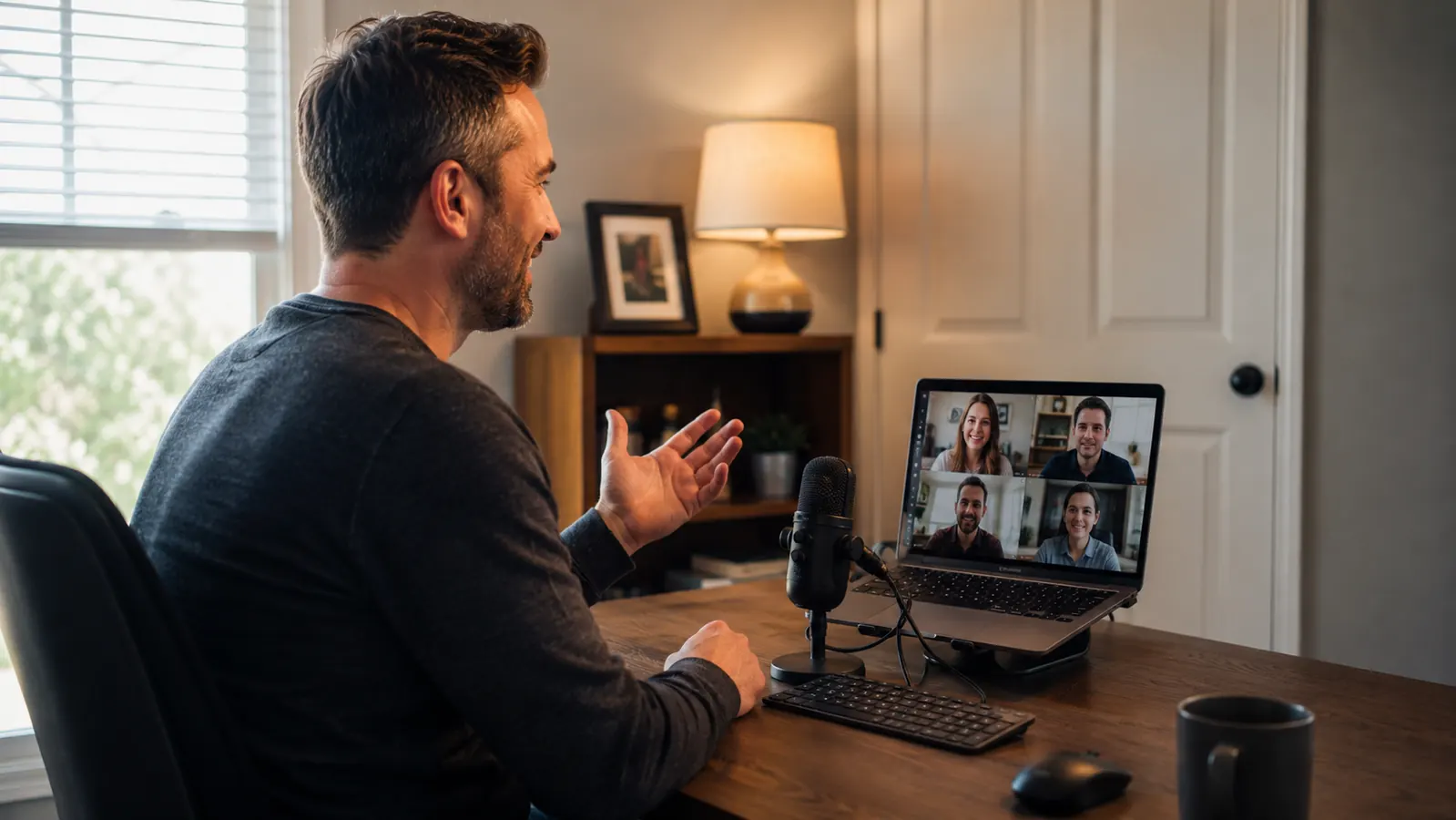
I've worked remote for an IT firm for eight years now, and I thought my home office setup was solid, until March, during a client kickoff worth six figures to my company. The client's VP paused mid sentence and asked if I was calling from a wind tunnel. I wasn't. It was just my laptop's built-in mic doing what laptop mics do.
I laughed it off, but afterward my manager pulled me aside and said clients had mentioned my audio quality twice before. Twice, and nobody told me. On my end, through my own headphones, everything sounded fine.
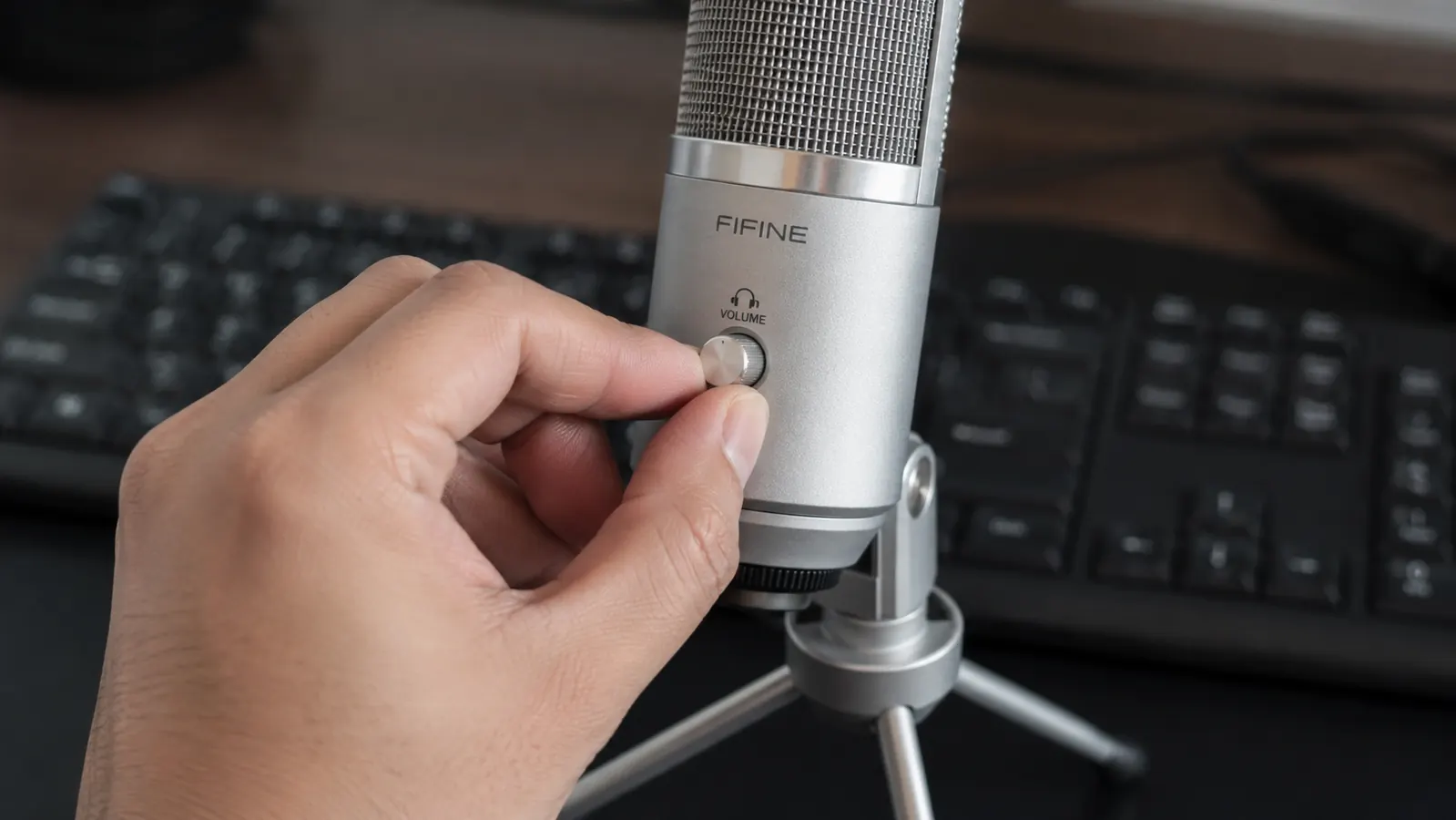
That weekend I went looking for a fix that wouldn't blow my budget, and I kept landing on the same recommendation from other remote workers: the FIFINE K669S, a USB condenser mic that runs about twenty five bucks. Cheap enough that if it didn't work, I wouldn't feel bad tossing it in a drawer and going back to whatever I was doing before.
It showed up two days later. Setup took about five minutes: plug the USB cable into my laptop, set it on the desk next to my keyboard, and pick it as the input device in Zoom. No drivers, no software to install. The body is metal, heavier than I expected for the price, with a gain knob on the front so I could dial the sensitivity down instead of it picking up every sound in the room.
My first real test was a stand-up with my project team the next morning. I turned the gain knob about halfway, sat roughly eight inches from the mic like the manual suggested, and ran the meeting like normal. Afterward, my teammate Priya messaged me privately: did I get a new headset, because I sounded like I was in a studio. I hadn't touched my headset. I'd just stopped using the mic built into my laptop.
I'd been the guy with bad audio for months and didn't know it. Turns out the fix wasn't a better headset. It was getting a real microphone off my laptop and onto my desk.
Still Sound Like You're Calling From a Tunnel?
The FIFINE K669S plugs in, no drivers needed, and gets your voice off the laptop mic in about five minutes. Check today's price on Amazon and see if your next call sounds different.
Amazon Check Today's Price on Amazon →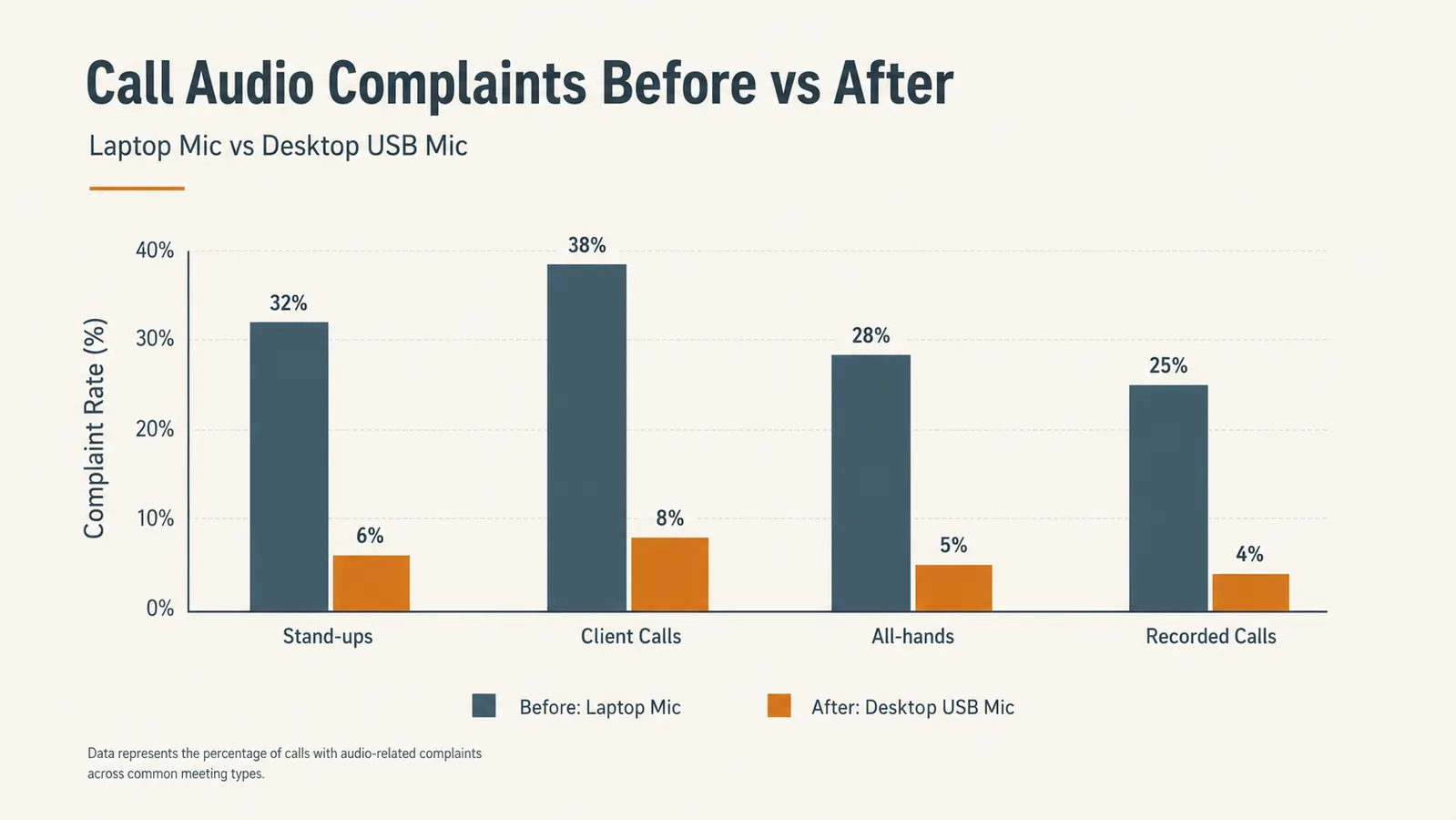
That was four months ago. Since then I've used the K669S for daily stand-ups, client calls, and a couple of all-hands meetings with forty people on the line. Nobody has asked if I'm in a wind tunnel since. My manager mentioned during my last review that my presentation quality had noticeably improved, and I didn't bother correcting him by explaining it was a twenty five dollar microphone and not some personal growth.
The other thing I noticed was how much less editing I did on recordings. Our team records certain client calls for training purposes, and before the K669S, I'd spend ten or fifteen minutes after some calls trying to isolate my voice from the room noise the transcription software kept flagging. With the mic close to my mouth and the gain turned down enough to avoid clipping, the transcripts came back clean the first time. That's a small thing, but when you multiply it across two or three recorded calls a week, it adds up to real time back.
It's not perfect. The desktop stand is fixed at an angle that doesn't adjust much, so I had to prop a small book under mine to get the height right for my desk. And because it's a cardioid condenser mic, it does pick up my dog barking in the next room if she gets going, more than my old headset ever did. I keep the door shut now during calls, which I didn't used to bother with.

A few weeks in, I mentioned the mic to a coworker, Danny, who'd been dealing with the same complaint from his own clients. He grabbed one, and within a week he sent me a screenshot of a client thanking him for how clear the call sounded. I'm not saying a microphone fixes everything about working from home. It won't fix a bad internet connection or a messy background. But if the complaint you keep hearing is specifically about how you sound, this is the cheapest, fastest fix I've found in eight years of remote work.
I looked at pricier options too, mics that ran well into the premium range with XLR inputs and separate audio interfaces. For a podcast studio that probably makes sense. For someone who spends his day on Zoom and Teams calls, not recording albums, the FIFINE covered what I actually needed without the extra gear.
What I'd Tell You If We Were Sitting at My Kitchen Table
If you're reading this because someone mentioned your audio on a call, or because you just have a feeling your laptop mic isn't doing you any favors, here's what I'd say over coffee. You don't need to spend a lot to fix this. You need a dedicated mic that sits closer to your mouth than your laptop ever will, and you need five minutes to plug it in and test it before your next important call. That's it. I'm not going to tell you this changed my career. It didn't. It just stopped being the reason people noticed me for the wrong thing.
Get Your Voice Off the Laptop Mic Before Your Next Call
If a twenty five dollar mic could quiet the meeting where I sounded like I was underwater, it's worth five minutes of your time to check today's price on the FIFINE K669S.
Amazon Check Today's Price on Amazon →